The centerpiece of American democracy, the Capitol Building is where history is debated and laws are made. Our DC Monuments Tour Package will give you insights into its stunning architecture and the vital role it plays in shaping the nation.
The U.S. Capitol Building is one of the most recognizable landmarks in Washington DC and one of the most important buildings in the United States. Standing at the eastern end of the National Mall, the Capitol is where the United States Congress meets to debate and shape federal legislation.
Its iconic white dome, grand neoclassical architecture, and expansive Capitol Grounds make it one of the most photographed sights in the nation's capital. Behind its impressive appearance is more than two centuries of American history, political debate, architectural change, and national milestones.
See the U.S. Capitol as part of a broader Washington DC Day Tour with DC Monuments Tour and discover the stories behind its famous dome, Rotunda, historic chambers, and role in the development of the United States.
About the U.S. Capitol Building - History & Architecture
The history of the U.S. Capitol begins in the early years of the United States government. George Washington selected the site for the new Capitol, and William Thornton's design was selected in 1793. Washington laid the Capitol's cornerstone on September 18, 1793, and Congress first met in the building in November 1800.
The building continued to expand as the country grew. The original dome was completed in 1824, but by the 1850s it had become too small for the enlarged Capitol. Architect Thomas U. Walter designed the larger cast-iron dome visitors recognize today. Construction began in 1856 and was completed in 1866.
The Statue of Freedom was placed at the top of the dome in 1863. The bronze statue, designed by sculptor Thomas Crawford, stands 19 feet 6 inches tall, while the top of the statue reaches approximately 288 feet above the East Front Plaza.
Key Facts Every Visitor Should Know
- Cornerstone: September 18, 1793, laid by President George Washington
- Architect of the original design: William Thornton
- Congress first met: November 17, 1800
- Current Capitol Dome: Designed by Thomas U. Walter and constructed from 1856 to 1866
- Dome height: Approximately 288 feet from the ground to the top of the Statue of Freedom
- Statue of Freedom: Installed atop the dome in 1863
- Statue height: 19 feet 6 inches
- Capitol Dome ironwork: Approximately 8.9 million pounds
- Capitol Grounds: Approximately 58.8 acres
The Capitol's present appearance developed over many decades rather than being completed as one single construction project. Its Rotunda, north and south wings, dome, artwork, and later Visitor Center additions reflect different periods in American history.
What You Will See & Learn on the Tour
DC Monuments Tour guides bring the U.S. Capitol to life by explaining the history behind the building rather than simply pointing out its famous exterior.
During your Capitol sightseeing stop, you will see one of Washington DC's most recognizable landmarks and learn how its architecture evolved alongside the country itself.
On Your Guided U.S. Capitol Tour Stop, You Will Learn
- How George Washington selected the location and laid the Capitol's cornerstone in 1793
- The story behind William Thornton's original Capitol design
- Why the Capitol required major expansions during the 19th century
- How Thomas U. Walter designed the iconic cast-iron Capitol Dome
- The history behind the Statue of Freedom at the top of the dome
- How the Civil War affected construction and daily life at the Capitol
- The significance of the Rotunda and its historic artwork
- The role of the Capitol as the meeting place of the United States Congress
- How the Capitol Grounds were transformed under landscape architect Frederick Law Olmsted
The Capitol's dome contains approximately 8.9 million pounds of ironwork, while the interior Rotunda features Constantino Brumidi's famous fresco, The Apotheosis of Washington.
DC Monuments Tour includes the U.S. Capitol as a featured stop on its Washington DC sightseeing itinerary, allowing guests to experience the landmark comfortably while learning about its history from a local guide.
If you want to explore more of the National Mall during your visit, see our guide to the Washington DC National Mall tour by electric vehicle.
Visiting the U.S. Capitol Building - Tips & What to Expect
Visiting the Capitol is one of the highlights of a Washington DC sightseeing trip. If you want to explore the historic interior, there are a few important things to know before arriving.
Location & Getting There
Address: U.S. Capitol Visitor Center, Washington, DC 20510
Main Visitor Entrance: The Capitol Visitor Center is located underground beneath the East Front Plaza of the U.S. Capitol.
Hours: The Capitol Visitor Center is open Monday through Saturday from 8:30 a.m. to 4:30 p.m.
Admission: Entry and official Capitol tours are free.
All visitors must pass through security screening before entering.
The official Capitol Visitor Center recommends making a tour reservation in advance. Same-day passes may also be available, subject to availability.
Public Access & Interior Visits
Visitors who want to see the historic interior of the Capitol must take a guided tour. Self-guided tours of the historic Capitol are not offered.
The standard Capitol tour is led by professional guides and visits the Crypt, Rotunda, and National Statuary Hall.
The standard tour does not include the Senate and House Galleries.
Official Capitol tours, programs, and activities are free of charge. The standard guided tour lasts approximately one hour, although the route can change. Visitors who want to watch Congress in session require separate gallery passes.
Best Times to Visit
- Morning visits can provide excellent natural light for photographing the Capitol's exterior and surrounding grounds.
- Weekdays can be especially interesting for visitors who want to experience the Capitol as an active center of the federal government.
- The Capitol's exterior is particularly impressive around sunrise and sunset when changing light highlights the dome and East Front.
- Check the official visitor schedule before planning an interior tour because hours, tour availability, and access can change.
Nearby Attractions
Library of Congress: The Thomas Jefferson Building is located directly east of the Capitol, with a pedestrian connection from the Capitol Visitor Center.
U.S. Supreme Court: Located just northeast of the Capitol Grounds.
National Mall: The Capitol marks the eastern end of the National Mall, with the Washington Monument and Lincoln Memorial farther west.
National Gallery of Art: Located just northwest of the Capitol Grounds. You can learn more about visiting this major museum in our National Gallery of Art Washington DC tour guide.
National Museum of the American Indian: Located southwest of the Capitol along Independence Avenue.
The Capitol Grounds cover approximately 58.8 acres and feature paths, gardens, trees, fountains, and historic landscape features.
For visitors planning a longer sightseeing day, the Capitol can also be combined with the Lincoln Memorial and other major landmarks. Our one-day Washington DC itinerary provides another practical way to organize your sightseeing time.
Why See the U.S. Capitol with DC Monuments Tour?
Washington DC has countless ways to explore its historic landmarks. DC Monuments Tour combines the Capitol stop with a broader sightseeing experience, allowing visitors to see multiple major attractions during one comfortable journey.
What Sets Our Capitol Sightseeing Experience Apart
- Expert local guides who share stories about Capitol history, architecture, Congress, and Washington DC
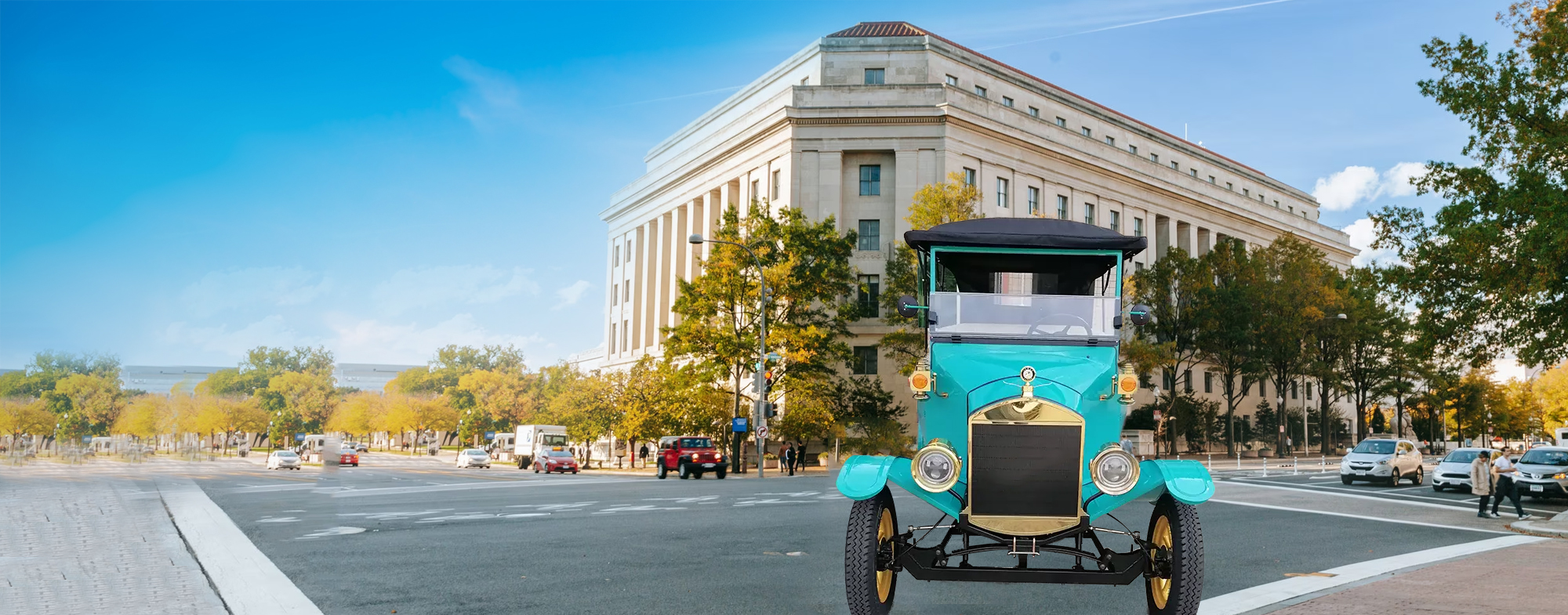
- Travel in a vintage electric luxury vehicle for a comfortable sightseeing experience
- DC Day Tour, DC Night Tour, and customizable Private Tour options
- Short sightseeing stops that give you time to see landmarks and take photographs
- Hotel pickup and drop-off within 1.5 miles of the White House
- The Capitol is part of a comprehensive Washington DC itinerary featuring multiple major monuments and memorials
- Private touring means you can enjoy the experience without being packed into a large sightseeing bus
DC Monuments Tour's current day-tour itinerary lists the U.S. Capitol as a 10-minute sightseeing stop, alongside other major Washington DC attractions.
If you prefer a more personalized experience, explore our private Washington DC tours, which allow you to explore the city without joining a large group.
Whether you are visiting Washington DC for the first time or returning to explore more of the city, seeing the Capitol with a knowledgeable guide adds context to one of America's most recognizable landmarks.
Explore the Capitol as Part of a Washington DC Sightseeing Tour
The U.S. Capitol is only one part of Washington DC's historic core. A well-planned sightseeing route can connect the Capitol with the National Mall, memorials, the White House, and other major landmarks without spending the entire day walking between distant stops.
For first-time visitors, our Washington DC day tour guide can help you understand how a sightseeing day can be structured around the city's major landmarks.
You can also explore the White House tour guide to plan another important stop near the National Mall.
If you are visiting later in the day, a Washington DC night tour offers another way to see the city's monuments after sunset.
Book Your U.S. Capitol Sightseeing Tour Today
The U.S. Capitol is more than an impressive building with a famous dome. It is a place where American government has developed through more than two centuries of history, debate, expansion, and change.
See the Capitol, learn the stories behind its architecture, and explore Washington DC's most important landmarks in comfort with DC Monuments Tour.
Choose from Washington DC sightseeing tours and discover the U.S. Capitol from a perspective that goes beyond the postcard.