A 3-day Washington DC itinerary is ideal for first-time visitors who want to experience the capital's major monuments, memorials, Smithsonian museums, the U.S. Capitol, and White House area without rushing every attraction. Spend Day 1 exploring the National Mall and memorials, Day 2 visiting selected Smithsonian museums, and Day 3 exploring Capitol Hill and the White House area. Advance planning is recommended for timed-entry museums and White House tours.

Table of Contents
- Introduction
- Quick Overview: Your 3 Days in Washington DC
- Before You Start Your Washington DC Trip
- Day 1: Explore the National Mall and Washington's Iconic Memorials
- Morning: Lincoln Memorial
- Late Morning: Vietnam Veterans Memorial
- Midday: Korean War Veterans Memorial
- Afternoon: World War II Memorial
- Late Afternoon: Washington Monument
- Evening: See Washington DC After Dark
- Day 2: Smithsonian Museums and American History
- Morning: National Museum of American History
- Lunch Break
- Afternoon: Choose Your Smithsonian
- Evening: Downtown Washington DC
- Day 3: U.S. Capitol, White House and Central Washington
- Morning: U.S. Capitol
- Late Morning: Library of Congress Area
- Afternoon: White House and President's Park
- Late Afternoon: Choose Your Final Experience
- Best Way to Organize the 3-Day Washington DC Itinerary
- What to See in DC in 3 Days: The Essential List
- How to Turn This Into a Washington DC Weekend Itinerary
- How to Get Around Washington DC During Three Days
- Practical Tips for Your 3-Day Washington DC Trip
- Common Mistakes to Avoid
- Is This 3-Day Washington DC Itinerary Good for Families?
- What About Couples?
- Is It Suitable for Older Travelers?
- 3-Day Washington DC Itinerary at a Glance
- Key Takeaways
- Conclusion
Introduction
Planning a trip to Washington DC can feel surprisingly difficult.
The city has world-famous monuments, free Smithsonian museums, historic neighborhoods, the U.S. Capitol, the White House, memorials, parks and plenty of places worth stopping for a photo. The problem is not finding things to do. It is deciding what actually fits into three days.
This 3 day itinerary Washington DC guide keeps the plan realistic. Instead of racing from one attraction to another, it groups nearby sights together so you spend more time exploring and less time figuring out where you are going next.
You will see the major National Mall memorials, visit some of Washington's most important museums, explore the Capitol and White House areas, and still have room for a relaxed evening.
If you are planning a Washington DC weekend itinerary, you can also use the same structure by treating Day 1 as your arrival/sightseeing day, Day 2 as your main museum day, and Day 3 as your final sightseeing day.
Quick Overview: Your 3 Days in Washington DC
| Day | Main Area | Highlights |
|---|---|---|
| Day 1 | National Mall & Memorials | Lincoln Memorial, Vietnam Veterans Memorial, Korean War Veterans Memorial, World War II Memorial, Washington Monument |
| Day 2 | Smithsonian & National Mall | National Museum of American History, National Museum of Natural History, National Air and Space Museum, National Museum of African American History and Culture |
| Day 3 | Capitol, White House & Downtown | U.S. Capitol, Library of Congress area, White House, President's Park and optional downtown attractions |
Tip: Do not try to visit every Smithsonian museum in one day. Washington has an impressive number of museums, but your feet do not care how impressive they are.
Before You Start Your Washington DC Trip
A good itinerary starts before you arrive.
Washington DC is a city where advance planning can save a surprising amount of time. Some attractions have timed-entry requirements or advance reservations, while others are easier to visit without a reservation.
The Smithsonian currently offers free admission at its Washington museums, but some locations require free timed-entry passes. The National Air and Space Museum and National Museum of African American History and Culture are among the museums that require passes. Check the official Smithsonian visitor information before your trip.
The National Mall itself is open 24 hours, although individual attractions have their own operating schedules.
If you want to visit inside the White House, plan well ahead. White House tour requests are submitted through a Member of Congress for U.S. citizens, while international visitors should contact their embassy. The National Park Service recommends submitting requests at least three weeks before the desired tour date.
Day 1: Explore the National Mall and Washington's Iconic Memorials
Your first day should focus on the part of Washington DC that most visitors picture when they think about the capital: the National Mall.
This is the best day to see the major memorials because many of them sit within the same general sightseeing area. You can walk between some stops, but a private sightseeing vehicle can reduce the amount of time spent crossing the Mall.
Morning: Lincoln Memorial
Start your Washington DC itinerary at the Lincoln Memorial.
Visit early if you want a calmer atmosphere and better conditions for photographs. The memorial's steps also provide one of the city's classic views across the National Mall toward the Washington Monument and U.S. Capitol.
Take time to see the statue of Abraham Lincoln and read the inscriptions from two of his major speeches.
Do not rush this stop. It sets the historical tone for the rest of the day.
Late Morning: Vietnam Veterans Memorial
Walk or travel a short distance to the Vietnam Veterans Memorial.
The memorial's black granite Wall contains the names of more than 58,000 service members. Unlike many traditional monuments, the design encourages visitors to interact with the space quietly and personally.
If you are looking for a specific name, use the memorial's directories to find the correct panel and line.
This is also a good point to slow down. You do not need to turn every stop into a race against the clock.
For visitors who want to explore the National Mall with a local guide and private transportation, a private Washington DC tour can combine several nearby memorials in one route.
Midday: Korean War Veterans Memorial
Continue to the Korean War Veterans Memorial.
The memorial uses a very different visual approach from the Vietnam Veterans Memorial. Its patrol of stainless-steel soldier figures creates a more immediate sense of movement and presence.
This contrast is one reason it makes sense to visit several memorials together. Each one tells a different story and uses architecture or sculpture in a different way.
Afternoon: World War II Memorial
Next, head toward the World War II Memorial.
The memorial sits between the Washington Monument and Lincoln Memorial and features large pillars representing U.S. states and territories, along with fountains and the Freedom Wall.
Give yourself time to walk around rather than viewing it from one side.
Late Afternoon: Washington Monument
Finish the main sightseeing portion of Day 1 around the Washington Monument.
If you want to go inside the monument, plan ahead for tickets and security. The National Park Service says a typical visit takes about 45 minutes to one hour.
If you do not have time for an interior visit, the surrounding grounds still provide excellent views and connect naturally with the other National Mall attractions.
Evening: See Washington DC After Dark
After dinner, consider seeing the monuments at night.
The National Mall and its memorial sites offer a completely different atmosphere after sunset. The National Park Service notes that early morning and evening can be particularly tranquil times to visit.
If you prefer to see the illuminated landmarks with a guide, consider a Washington DC night tour.
For many visitors, this becomes one of the highlights of the entire trip.
Day 2: Smithsonian Museums and American History
Day 2 is your museum day.
Do not make the mistake of trying to see every museum. The Smithsonian is a huge museum and research complex, with numerous museums in Washington DC. Several are located around the National Mall.
Choose two or three based on your interests and give them enough time.
Morning: National Museum of American History
Begin with the National Museum of American History.
This is a strong choice if you want to understand American culture, politics, technology and everyday life through historical objects.
The museum is located on Constitution Avenue along the National Mall and currently offers free admission.
Allow several hours if you want more than a quick walk through the galleries.
Lunch Break
Take a proper lunch break before continuing.
It sounds obvious, but museum days have a habit of turning lunch into “we'll eat after this exhibit,” followed by another exhibit, followed by another floor.
Your afternoon self will appreciate a real meal.
Afternoon: Choose Your Smithsonian
Pick one museum for your main afternoon visit.
National Museum of Natural History
If you enjoy science, animals, geology or natural history, this is an excellent choice.
The museum is open seven days a week from 10 a.m. to 5:30 p.m., except December 25, and admission is free. No tickets are currently required for general admission.
National Air and Space Museum
For aviation and space enthusiasts, the National Air and Space Museum is an obvious choice.
Because timed-entry passes are required, check availability before you build your schedule around it.
National Museum of African American History and Culture
This museum explores African American history and culture through exhibitions and collections spanning multiple periods of American history.
It also requires a free timed-entry pass, so book ahead rather than assuming you can simply walk in.
Evening: Downtown Washington DC
After the museums, leave the National Mall for a change of scenery.
You can explore downtown, have dinner or continue toward the White House and President's Park area.
If you still have energy, consider an evening sightseeing experience rather than adding another major museum. The goal of a good DC trip planner is not to fill every minute. It is to make the important parts enjoyable.
Day 3: U.S. Capitol, White House and Central Washington
Use your final day for two of Washington DC's most recognizable political landmarks: the U.S. Capitol and White House.
Morning: U.S. Capitol
Start at the U.S. Capitol.
The Capitol Visitor Center provides access to tours, exhibitions and visitor services. Check current visitor requirements and prohibited-item rules before arriving.
Give yourself enough time for security and the visitor experience rather than planning another attraction immediately afterward.
The Capitol area also connects naturally with the Library of Congress and other important sites on Capitol Hill.
Late Morning: Library of Congress Area
If tickets and opening arrangements fit your schedule, continue toward the Library of Congress.
The building itself is worth seeing even if you are primarily interested in architecture and history.
Because visitor access and timed-entry arrangements can change, check official information before making it the fixed centerpiece of your day.
Afternoon: White House and President's Park
Move toward the White House and President's Park.
If you have secured an interior White House tour, follow the specific arrival and security instructions provided for your tour. If not, you can still visit the surrounding public areas and the White House Visitor Center.
The White House Visitor Center is open daily from 7:30 a.m. to 4 p.m., according to the National Park Service.
The Visitor Center includes historical objects, exhibits and a short film about the White House.
Late Afternoon: Choose Your Final Experience
For your final afternoon, choose something you did not have time for during the first two days.
You could return to a favorite part of the National Mall, explore another museum, visit a downtown neighborhood or take a final sightseeing tour.
If you want to cover several remaining landmarks without spending the afternoon navigating streets and parking, a private 4-seater Washington DC tour or another private vehicle option can work well for couples and small groups.
Best Way to Organize the 3-Day Washington DC Itinerary
The easiest way to make three days work is to think geographically.
| Day | Keep These Attractions Together | Why |
|---|---|---|
| Day 1 | Lincoln Memorial, Vietnam Veterans Memorial, Korean War Veterans Memorial, World War II Memorial, Washington Monument | Major National Mall memorials are concentrated in the same general area. |
| Day 2 | Smithsonian museums | Several major museums sit along or near the National Mall. |
| Day 3 | U.S. Capitol, Library of Congress, White House and President's Park | Focuses on Washington's government and downtown landmarks. |
The Smithsonian itself notes that its National Mall museums are concentrated between approximately 3rd and 15th Streets, making geographic planning especially useful for museum days.
What to See in DC in 3 Days: The Essential List
If you are wondering what to see in DC in 3 days, prioritize the attractions that best represent the city's history, government and culture.
- Lincoln Memorial
- Vietnam Veterans Memorial
- Korean War Veterans Memorial
- World War II Memorial
- Washington Monument
- At least two Smithsonian museums
- U.S. Capitol
- Library of Congress area
- White House and President's Park
- National Mall
Everything else should depend on your interests and available time.
For example, a family may prefer the National Air and Space Museum and Natural History Museum, while a history-focused traveler may spend more time at American History and African American History and Culture.
How to Turn This Into a Washington DC Weekend Itinerary
If you only have a long weekend, you can compress the plan without removing the major highlights.
Friday Evening
Arrive, have dinner and visit a few monuments at night if your arrival time allows.
Saturday
Spend the morning and afternoon exploring the National Mall and its memorials. Finish with a Washington DC night tour or an evening walk around the illuminated monuments.
Sunday
Choose two Smithsonian museums in the morning and then explore the Capitol or White House area in the afternoon.
Monday or Final Morning
Use your remaining time for anything you missed, then leave enough time to reach the airport or train station.
This version works particularly well for travelers who want a Washington DC weekend itinerary without spending the entire trip inside museums.
How to Get Around Washington DC During Three Days
You have several transportation options in Washington DC, and the best choice depends on your itinerary.
Metro
Metrorail is useful for moving between neighborhoods and attractions that are not within easy walking distance.
The Smithsonian notes that Metro stations serve the National Mall area, while the National Museum of American History specifically recommends public transportation because free parking is limited.
Walking
Walking works particularly well when you group nearby National Mall attractions together.
Do not underestimate the distance, though. The National Mall covers a large area, and three consecutive days of sightseeing can add up quickly.
Private Tour
A private sightseeing vehicle can be useful when your priority is seeing several landmarks efficiently.
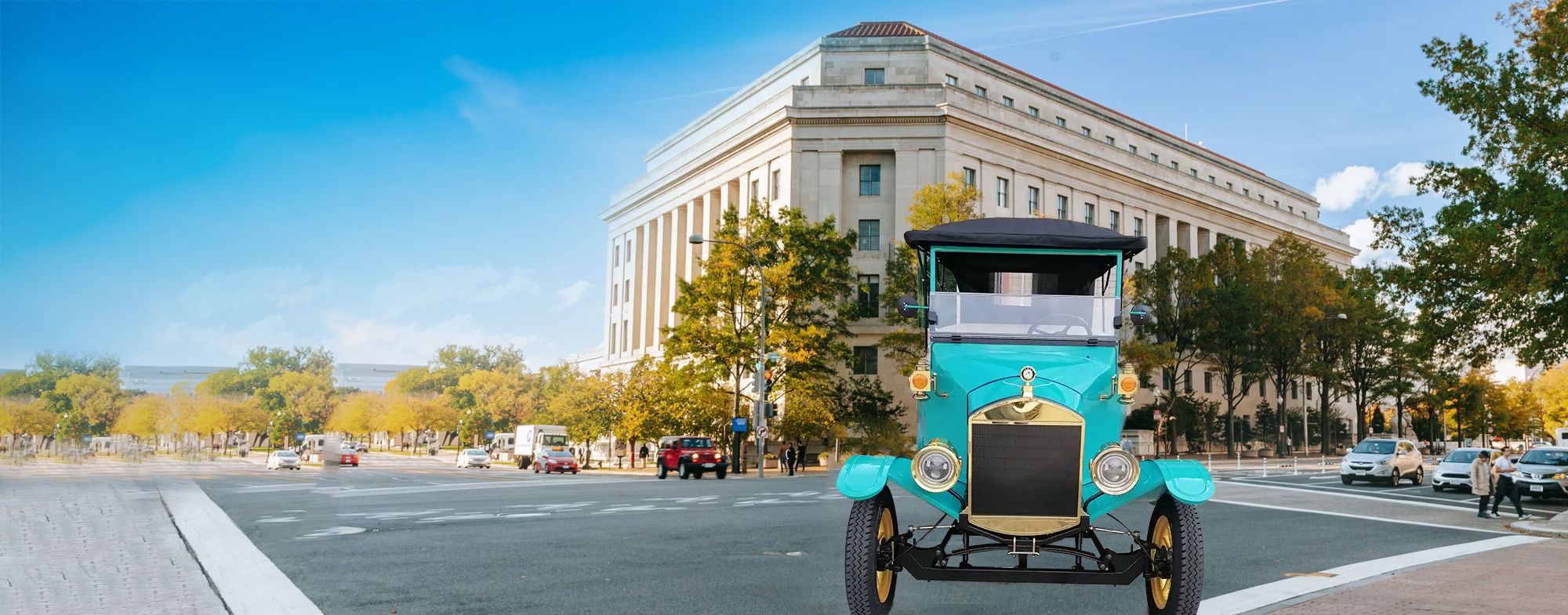
DC Monuments Tour's private tours offer private sightseeing in vintage-style electric vehicles, with options for different group sizes.
For larger families or groups, the 10-seater Washington DC tour can provide a practical private transportation option.
Practical Tips for Your 3-Day Washington DC Trip
- Book timed-entry attractions early. Some Smithsonian museums require free passes, and White House tours require advance planning.
- Group attractions geographically. Do not cross the city repeatedly when nearby attractions can be visited together.
- Start early. Morning hours can be quieter, particularly around major landmarks.
- Wear comfortable shoes. Even with transportation, you will walk substantially during three days of sightseeing.
- Carry water. Summer in Washington can be hot and humid.
- Check official attraction information. Hours, ticket rules and access arrangements can change.
- Do not overbook your days. Leave some flexibility for weather, security lines and attractions that take longer than expected.
- Use evenings wisely. The monuments can look very different after dark.
- Keep one flexible block. Use it for a museum or attraction you could not fit into the first two days.
Common Mistakes to Avoid
Trying to See Every Museum
The Smithsonian is too large to treat like a checklist. Choose museums that match your interests.
Underestimating the National Mall
The Mall looks simple on a map. The walking adds up quickly.
Leaving the White House Until the Last Minute
If you want an interior tour, start the planning process well before your trip. White House tour requests require advance coordination.
Ignoring Timed Entry
Some Smithsonian museums require free timed-entry passes. Check the rules before your travel day.
Scheduling Every Minute
A delayed train, long security line or unexpectedly interesting museum exhibit can change your schedule.
Leave some breathing room.
Trying to Drive Everywhere
Parking near major attractions can be limited, and navigating downtown traffic adds another task to your sightseeing day. Public transportation, walking and guided transportation can often make the day simpler.
Is This 3-Day Washington DC Itinerary Good for Families?
Yes, but families should adjust the pace.
Children may enjoy the Air and Space Museum, Natural History Museum and the monuments, but three full days of historical sightseeing can become tiring.
Build in breaks and avoid scheduling too many museums on the same day.
A private tour can also help families move between major landmarks without requiring everyone to walk the entire National Mall.
What About Couples?
Couples can use the same itinerary but make the evenings more flexible.
Spend the first evening around the illuminated monuments, choose a museum or two on Day 2, and leave Day 3 open for the Capitol, White House area and a relaxed dinner.
Washington DC is particularly enjoyable after dark, when many of the major monuments take on a different atmosphere.
Is It Suitable for Older Travelers?
It can be, but walking distances deserve attention.
The National Mall is large, and several attractions require walking after you arrive. A private sightseeing vehicle can reduce the distance between landmarks and make it easier to build rest stops into the day.
For older travelers who prefer a more relaxed pace, consider our Washington DC tour guide for senior citizens when planning your sightseeing schedule.
3-Day Washington DC Itinerary at a Glance
| Day | Morning | Afternoon | Evening |
|---|---|---|---|
| Day 1 | Lincoln Memorial + Vietnam Veterans Memorial | Korean War Memorial + World War II Memorial + Washington Monument | Monuments at night |
| Day 2 | National Museum of American History | Choose Natural History, Air and Space, or African American History and Culture | Downtown dinner / evening sightseeing |
| Day 3 | U.S. Capitol + Capitol Hill | Library of Congress area + White House + President's Park | Flexible final evening |
Key Takeaways
- A good 3 day itinerary Washington DC should focus on geographic grouping rather than trying to see everything.
- Day 1 works best for the National Mall and major memorials.
- Day 2 is ideal for choosing two or three Smithsonian museums.
- Day 3 can focus on the U.S. Capitol, Capitol Hill, White House and downtown Washington.
- Some Smithsonian museums require free timed-entry passes, so check before visiting.
- White House tours require advance planning.
- National Mall memorials can be visited beyond normal museum hours, while individual attractions have their own schedules.
- Walking, Metro and private sightseeing tours can all work well depending on the route.
- Do not overpack the itinerary. Three days should feel like a vacation, not a competitive walking event.
Conclusion
The best 3 day itinerary Washington DC is not the one with the longest list of attractions. It is the one that gives you enough time to actually experience the places you came to see.
Start with the National Mall and its major memorials. Spend your second day exploring the Smithsonian museums that match your interests. Use the third day for the Capitol, White House and the political heart of Washington.
Keep your schedule flexible, book timed-entry attractions ahead of time and give yourself realistic travel time between stops.
If you want to see more of the National Mall without spending the entire day walking, consider a private Washington DC sightseeing tour. A guided private route can make it easier to combine several monuments and memorials while keeping the experience comfortable and focused.
Whether you are planning a first visit, a family vacation or a Washington DC weekend itinerary, three days are enough to experience many of the capital's defining sights—provided you plan around what is close together and leave a little room for discovery.