The best way to get around Washington, DC, depends on your itinerary, budget, and sightseeing preferences. For most visitors, combining public transportation with walking is the most practical and affordable option. Use the Washington Metro and Metrobus to travel between neighbourhoods and major attractions, then explore the National Mall and nearby monuments on foot. If you are visiting for the first time or have limited time, a guided sightseeing tour is a convenient choice for seeing multiple landmarks without the hassle of planning every stop yourself. Families and small groups may find a private sightseeing tour more comfortable and flexible, especially when travelling with children or older adults. If you plan to drive, check parking availability and local restrictions before arriving. Our recommendation: Choose public transportation for everyday travel, walking for nearby attractions, and a guided sightseeing tour if you want to experience more of Washington, DC, in less time.
Table of Contents
- Introduction
- Getting Around Washington DC by Metro
- Walking Around the National Mall
- Parking Near the National Mall
- Using Buses, Taxis, and Ride-Hailing Services
- Guided Sightseeing Tours
- Day Tours vs. Night Tours
- One-Day Washington DC Sightseeing Itinerary
- Common Transportation Mistakes to Avoid
- Final Thoughts
Introduction
Washington, DC, offers much more than famous monuments and government buildings. From the Lincoln Memorial and Washington Monument to the Smithsonian museums, the American capital has plenty to explore. However, choosing how to travel between these attractions can make a big difference to your sightseeing experience.
Should you take the Metro, rent a car, walk between landmarks, or book a guided tour? The answer depends on your itinerary, budget, available time, and travel preferences.
For first-time visitors, understanding how to get around Washington DC makes it easier to plan a practical itinerary without spending too much time navigating unfamiliar streets.
This guide explains the main transportation options, parking near the National Mall, public transit fares, and sightseeing alternatives. It also explores how a guided vintage electric car tour can help visitors discover the city's famous landmarks in a convenient and memorable way.
1. Getting Around Washington DC by Metro
The Washington Metro is one of the most practical ways to travel around the city. It connects central Washington with surrounding areas in Maryland and Virginia, making it useful for visitors staying outside downtown.
The system includes six colour-coded rail lines: Red, Orange, Silver, Blue, Yellow, and Green. Stations serve several important destinations, including downtown areas, museums, and neighbourhoods popular with tourists.
How Does the DC Metro Work?
Visitors can plan their journeys using station maps, the official Metro trip planner, and current service information.
To use Metrorail, enter through a station's fare gates and tap an accepted payment method. Tap again when leaving the station, using the same payment method for both entry and exit.
Fares vary according to the journey, travel time, and day of the week. Check the latest prices before travelling rather than assuming every ride costs the same.
For Metrobus, passengers generally pay when boarding. Regular bus fares differ from rail fares, so check the applicable rate before starting your journey.
You can find current fares and payment information through the official Washington Metropolitan Area Transit Authority (WMATA) website.
Is the Metro Good for Tourists?
Yes. The Metro works particularly well for travelling between your hotel, downtown Washington, and attractions near rail stations.
For example, visitors can use the system to reach areas near the National Mall before exploring museums or monuments on foot.
However, a Metro station does not necessarily sit beside the attraction you want to visit. You may still need to walk several blocks after leaving the train.
This matters when you plan to visit multiple memorials in one afternoon. A journey that looks short on a map can involve considerably more walking than expected.
Tips for Using the DC Metro
- Check station locations before booking your accommodation.
- Use the official trip planner to compare routes and fares.
- Confirm operating hours and service alerts on your travel date.
- Keep the same payment card or transit card for entering and exiting.
- Allow extra time when travelling during busy periods.
- Check the walking distance between your station and the attraction.
Best for: Budget-conscious travellers, visitors staying near Metro stations, and people travelling between different parts of the metropolitan area.
2. Walking Around the National Mall
Walking remains one of the most rewarding ways to explore Washington DC.
The National Mall brings together important monuments, memorials, museums, and historic landmarks. Visitors can explore the area at their own pace, stop for photographs, and spend time at attractions that interest them most.
Popular places include:
- Lincoln Memorial
- Washington Monument
- World War II Memorial
- Martin Luther King Jr. Memorial
- Jefferson Memorial
- Vietnam Veterans Memorial
Each location offers a different perspective on American history.
How Much Walking Should You Expect?
The answer depends on how many attractions you want to visit and how long you spend at each one.
Visiting one or two nearby landmarks may require only a manageable walk. Exploring several memorials, museums, and surrounding attractions in one day can involve considerably more walking.
Also, do not confuse sightseeing time with travel time. You might reach a memorial quickly but spend another 20 minutes exploring its surroundings or taking photographs.
For a broader look at walking distances and alternatives, read our guide to how long it takes to walk the National Mall.
Is Walking Enough to See All the Monuments?
Walking works well if you have plenty of time and enjoy exploring independently.
However, visitors with a packed itinerary may find it difficult to see numerous attractions on foot, especially during hot weather or when travelling with children and older family members.
A practical approach is to walk around one section of the National Mall, use public transportation or another sightseeing option to cover longer distances, and save additional walking for the attractions you most want to explore.
Best for: Visitors who enjoy independent exploration, photography, museums, and spending extra time at individual landmarks.
3. Parking Near the National Mall
Driving to Washington DC can be convenient, particularly for travellers arriving from nearby cities or staying outside the metropolitan area.
However, parking near the National Mall requires planning. Available spaces, parking limits, traffic, and local restrictions can affect your itinerary.
The National Park Service provides official information about parking within National Mall and Memorial Parks.
Where Can You Park Near the National Mall?
The National Park Service identifies several locations with metered parking, including sections of Constitution Avenue NW, Independence Avenue SW, Madison Drive NW, Jefferson Drive SW, and Ohio Drive.
Parking lots are also available in designated areas, including locations near East Potomac Park and the Tidal Basin.
Paid commercial garages and parking lots operate in downtown Washington, including areas north of the National Mall.
Your best option depends on the attractions you plan to visit, how long you intend to stay, and whether you prefer street parking or a garage.
Before setting off, consult the official National Park Service parking guide for current locations and restrictions.
How Much Does Parking Cost Near the National Mall?
The National Park Service's published parking information lists a metered parking rate of $2.30 per hour.
The published rules specify enforcement from 7 a.m. to 8 p.m., including weekends and holidays except December 25. Many street spaces have a three-hour maximum, while certain designated lots and areas allow longer stays.
These rules can vary by location. Always check the posted signs and current official guidance before leaving your vehicle.
Some parking lots have separate operating restrictions or temporary closures. For example, the National Park Service lists Lots B and C as closed for long-term construction through 2030. Check the current status before travelling.
Is Free Parking Available?
Yes, but free spaces may not be convenient for every itinerary.
The National Park Service identifies free parking at Hains Point in East Potomac Park. However, reaching your preferred attractions from there may require additional walking.
During busy travel periods, finding a suitable space can take time.
If you are visiting several monuments in a single day, calculate the likely parking cost, walking time, and time spent searching for a space before deciding whether to drive.
Parking Tips for Visitors
- Identify your main sightseeing destinations.
- Check parking options close to your first stop.
- Review hourly rates and maximum parking durations.
- Confirm whether the location accepts your preferred payment method.
- Check temporary closures and local parking restrictions.
- Allow extra time for traffic and finding a space.
Best for: Visitors arriving by car, travellers with accommodation outside downtown, and people who want the flexibility of driving between different parts of the region.
4. Using Buses, Taxis, and Ride-Hailing Services
The Metro is not the only public transportation option in Washington DC.
Metrobus serves routes across the city and surrounding areas. Depending on your destination, a bus may take you closer to a landmark than the nearest rail station.
Buses can also help connect different neighbourhoods when a direct Metro route is inconvenient.
Before boarding, check the route, destination, service frequency, and fare through the official WMATA website.
Are Taxis and Ride-Hailing Services Worth It?
Taxis and ride-hailing services can be useful when you want a direct trip without changing trains or buses.
They are particularly convenient for travelling between your hotel and a restaurant, reaching a destination with limited public transit connections, or returning to your accommodation after an evening out.
However, travel time and prices can change with traffic, demand, and the distance travelled.
Drop-off locations also matter. A vehicle may take you close to a monument, but you may still need to walk around the surrounding grounds.
For a day focused on multiple landmarks, compare the cost of separate rides with public transit or a sightseeing tour before making your decision.
Best for: Short point-to-point journeys, visitors carrying luggage, and travellers who prefer direct transportation.
5. Guided Sightseeing Tours: An Alternative to Planning Every Journey
Public transportation is excellent for getting around the city, but it does not automatically create a sightseeing itinerary.
You still need to decide which monuments to visit, how much time to spend at each location, and how to travel between them.
For first-time visitors, a guided tour can simplify these decisions.
Instead of planning every route independently, you can follow an organised itinerary and learn about the landmarks along the way.
This option is particularly useful when you have limited time in Washington DC or want an introduction to the city's major monuments before exploring independently.
Explore Washington DC With DC Monuments Tour
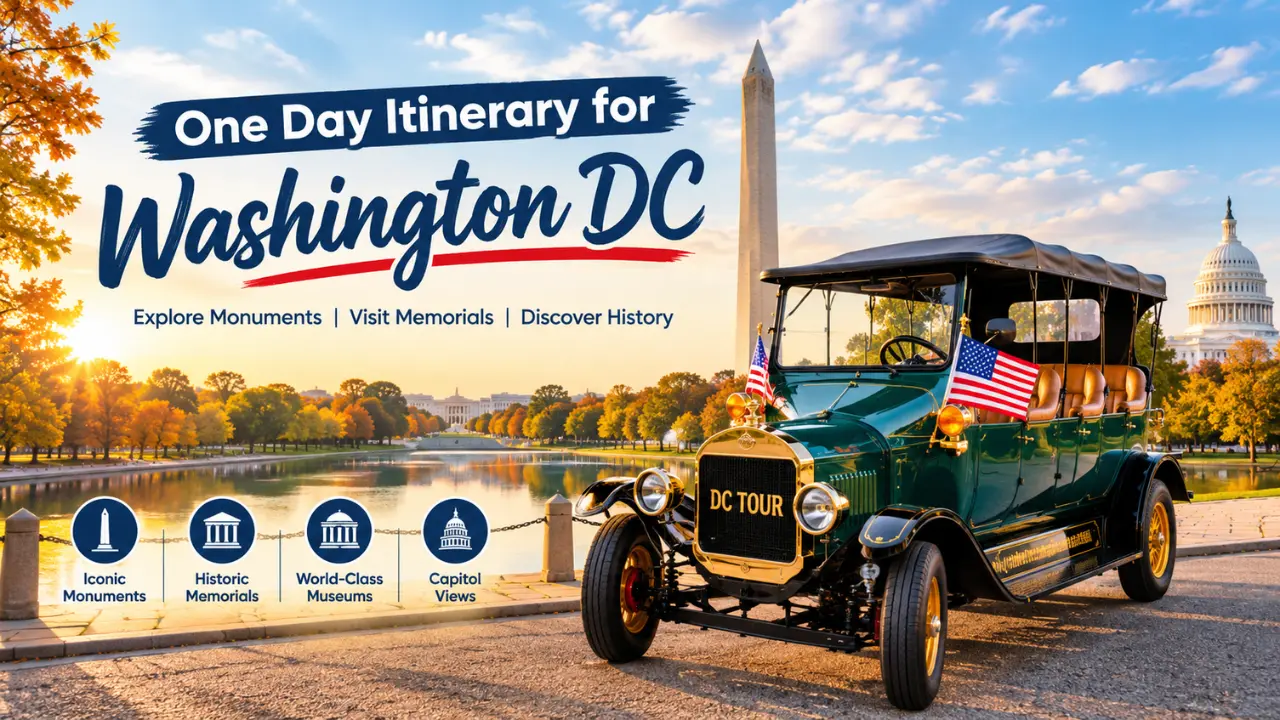
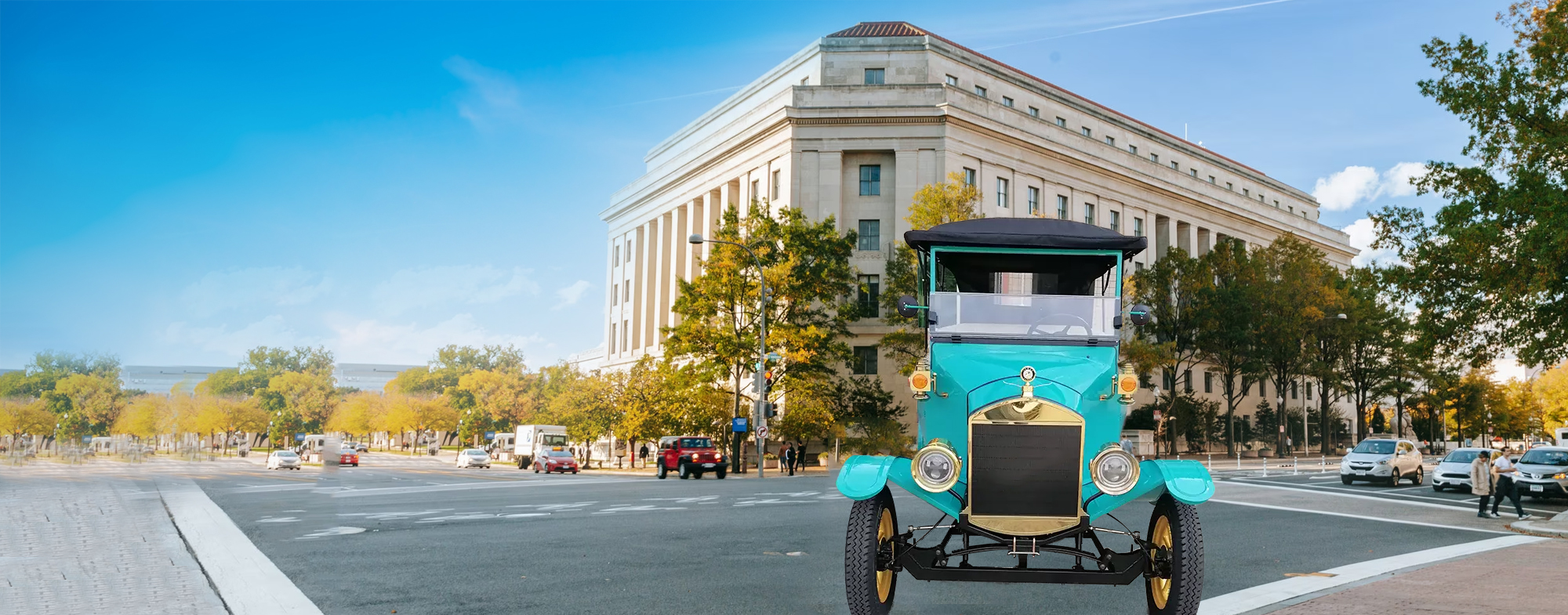
DC Monuments Tour offers guided sightseeing experiences in vintage-style electric vehicles.
The tours combine transportation with commentary about the city's important landmarks. They provide an alternative to visiting every location independently on foot.
Visitors can compare the available Washington DC day tours and Washington DC night tours according to their preferred sightseeing time.
The published tour information lists a duration of approximately two hours for the standard day and night experiences. Check the current itinerary and booking details before choosing a departure.
Why Consider a Vintage Electric Car Tour?
A guided vintage electric car tour offers several practical advantages.
1. Visit multiple landmarks in one planned outing
A guided itinerary helps you discover several important attractions without having to organise every connection yourself.
2. Learn about the places you visit
A guide can provide historical context and explain why different monuments matter. This adds another dimension to sightseeing beyond photographs.
3. Reduce the amount of walking between attractions
The vehicle carries you between designated stops, although you should still expect to walk when exploring monuments up close.
4. Enjoy a distinctive sightseeing experience
The vintage-style vehicles offer a different atmosphere from conventional sightseeing buses or independent travel.
5. Choose a format that suits your group
Depending on availability, DC Monuments Tour offers group and private experiences, with different vehicle capacities.
Are Private Tours Better for Families and Groups?
A private tour can be worth considering if you want to travel together and prefer a more personalised experience.
DC Monuments Tour lists private vehicle options for different group sizes, including four-, five-, seven-, and ten-seat options. Confirm the available vehicle, passenger capacity, and current price before booking.
Private tours may also offer more flexibility when arranging the itinerary, subject to the operator's terms and local access restrictions.
If you are travelling with older family members or someone who needs additional assistance, contact the operator before booking. Its vintage-style vehicles are not wheelchair accessible, although a vehicle that accommodates a folding wheelchair may be available on request, subject to availability.
Best for: First-time visitors, families, small groups, and travellers who want a guided introduction to Washington DC's most famous landmarks.
Explore private Washington DC tours.
6. Day Tours vs. Night Tours: Which Should You Choose?
Washington DC offers different sightseeing experiences depending on the time of day.
Your choice should depend on the monuments you want to see, your photography preferences, and how you plan to spend the rest of your day.
Washington DC Day Tours
Daytime sightseeing allows you to observe architectural details, read historical displays, and explore monument grounds in natural light.
A daytime tour may suit visitors who want to understand the layout of the National Mall before visiting museums or other attractions independently.
Explore the available Washington DC day tours to review the itinerary and booking information.
Washington DC Night Tours
After dark, illuminated monuments offer a different visual experience.
The Lincoln Memorial, Washington Monument, and other prominent landmarks can look quite different under evening lighting.
Night tours can also be an appealing option for travellers who prefer to reserve daytime hours for museums, shopping, or other activities.
However, sunset times change throughout the year, and the exact appearance of each landmark depends on lighting, weather, and local conditions.
Review the available Washington DC night tours before selecting your preferred time.
Which Option Is Better?
Choose a day tour if you want to observe monuments in daylight and combine sightseeing with nearby daytime activities.
Choose a night tour if illuminated landmarks and evening photography are priorities.
If you have enough time, you can explore different areas independently during the day and book a separate guided experience in the evening.
7. How to Plan a One-Day Washington DC Sightseeing Itinerary
If you have only one day in Washington DC, planning your route in advance can make your visit more enjoyable.
Trying to visit every monument, museum, and historic building in a single day can quickly turn a holiday into a race against the clock.
Instead, focus on the places that matter most to you.
Morning: Start With Your Main Attractions
Begin with the National Mall or another area that matches your interests.
If American history is your priority, consider the Washington Monument, World War II Memorial, and Lincoln Memorial.
Check opening arrangements and access requirements for any attraction that offers interior visits or timed entry.
Midday: Explore a Museum or Memorial
Choose one or two additional stops rather than attempting to visit every Smithsonian museum.
The time you need will depend on the exhibitions you want to see and how much you enjoy exploring each location.
Remember to include time for meals, rest, and moving between attractions.
Afternoon: Choose Your Next Sightseeing Area
Use public transportation, walking, or another suitable travel option to reach your next destination.
If you have already covered several landmarks on foot, consider an alternative that reduces the amount of additional walking.
A guided tour can also help you discover other important monuments without planning every route independently.
Evening: Experience the Monuments After Dark
If your schedule allows, finish your day with an evening sightseeing experience.
Illuminated landmarks offer a different atmosphere from daytime visits, making this a useful addition to your itinerary.
You can explore DC Monuments Tour's night sightseeing options when planning your evening.
The key is to build a realistic schedule. Three well-planned stops can provide a better experience than ten rushed visits.
8. Common Transportation Mistakes to Avoid in Washington DC
Even a well-planned trip can become stressful if you underestimate travel time.
Avoid these common mistakes:
Underestimating walking distances: Attractions may look close together on a map but require more walking than expected.
Assuming parking will be available: Check official parking information before driving to the National Mall.
Ignoring Metro service updates: Check current schedules, fares, and service alerts before travelling.
Trying to see everything in one day: Prioritise your interests and leave enough time to enjoy each stop.
Forgetting to account for traffic: Road conditions can affect taxis, ride-hailing services, and other road-based transportation.
Booking without checking the details: Review tour duration, meeting points, passenger capacity, pickup arrangements, and cancellation terms before paying.
Overlooking accessibility needs: Confirm whether a vehicle, route, or attraction meets your requirements before making a reservation.
A little preparation can help you spend more time exploring Washington DC and less time solving transportation problems.
Final Thoughts
Knowing how to get around Washington DC can help you plan a smoother and more enjoyable visit.
The Metro provides practical connections across the city, walking lets you explore the National Mall at your own pace, and parking can work for visitors arriving by car when they plan ahead.
For travellers who want to see several landmarks without organising every journey themselves, a guided sightseeing tour offers another option.
DC Monuments Tour combines guided commentary with vintage-style electric vehicle transportation, allowing visitors to experience the capital's famous monuments in a distinctive way.
Before your trip, compare your priorities, available time, and transportation budget. Then choose the combination that allows you to explore comfortably rather than rushing from one attraction to the next.
Ready to explore the capital?
Visit DC Monuments Tour to compare day tours, night tours, and private sightseeing options for your Washington DC visit.
Explore Day Tours | Explore Night Tours | Explore Private Tours
Official Sources and Further Reading
Use these official resources to verify transportation details before your visit.
- Washington Metropolitan Area Transit Authority — Metro routes, transit information, and service updates.
- WMATA Fare and Payment Information — Current payment methods and fare information.
- National Park Service Parking Guide — Parking locations and restrictions around the National Mall.
- National Park Service: Getting Around — Visitor transportation information for National Mall and Memorial Parks.
- National Park Service Parking Meter FAQ — Additional information about parking meters.