The best things to do in DC on a business trip depend on how much free time you have. If you have only two or three hours, focus on the National Mall, the Lincoln Memorial, the Washington Monument, and other nearby landmarks. A quick guided tour can help you cover several highlights without planning every stop yourself. If your meetings finish in the evening, consider DC evening sightseeing to see the monuments illuminated after dark. Choose one or two activities, allow time for traffic, and confirm current tour schedules and attraction access before setting out.

Table of Contents
- Why Visit Washington, DC During a Business Trip?
- Choose Activities Based on Your Available Time
- Take a Quick Tour of Washington, DC
- Explore the National Mall's Iconic Monuments
- Enjoy DC Evening Sightseeing
- Consider a Private Sightseeing Tour
- Visit a Museum if Your Schedule Allows
- Enjoy a Quick Meal Near the Attractions
- Sample Itineraries for Business Travelers
- Tips for Exploring DC Between Meetings
- Explore Washington, DC with DC Monuments Tour
Why Visit Washington, DC During a Business Trip?
A business trip to Washington, DC, does not have to mean spending every free minute in a hotel room or conference venue. Even if your schedule is packed with meetings, you may have enough time to see some of the city's most recognizable landmarks. Washington, DC, is particularly suitable for short sightseeing breaks because several famous monuments and memorials are concentrated around the National Mall. With a realistic plan, you can experience a little of the city's history without committing to a full-day excursion. The key is to match your plans to your available time. Trying to fit every museum, monument, restaurant, and neighborhood into a short break can leave you rushing from place to place. A focused itinerary is usually more rewarding. If you have only a couple of hours, consider a private Washington, DC tour or a sightseeing route that concentrates on selected landmarks. If you have an entire afternoon free, you can add a museum, a meal, or a walk around another part of the city. Business travelers should also consider the practical side of sightseeing. Meeting locations, traffic, weather, conference schedules, and the time needed to return to a hotel can all affect the experience. Planning around these details makes a short visit much easier.
Choose Activities Based on Your Available Time
Before choosing attractions, check how much time you can realistically spare. Your free time should include travel to the starting point, sightseeing, and the journey back to your next commitment.
One Hour: Choose One Area
If you have around an hour, stay close to your current location or select one nearby landmark. Depending on where you are, you might visit a monument, take a few photographs, or enjoy a short walk. Avoid planning several distant attractions. Even a short journey can take longer than expected when traffic is heavy or an event affects access.
Two Hours: Consider a Focused Monument Tour
A two-hour sightseeing window can work well for a compact tour of selected Washington, DC, landmarks. You may be able to see several monuments from the outside and stop for photographs, depending on the route and conditions. A Washington, DC day tour or an available private tour can help you organize your time. Check the current tour duration and itinerary before booking rather than assuming every attraction will be included.
Three to Four Hours: Add a Museum or Meal
With three or four hours, you have more flexibility. You could take a sightseeing tour and then enjoy lunch, visit one museum, or explore another nearby area. Choose one additional activity rather than adding several. Museum entry, security checks, queues, and travel between locations can use up your available time quickly.
An Evening Free: See the Monuments After Dark
If your meetings finish late in the day, consider evening sightseeing. Several monuments have a different atmosphere after sunset, when lighting highlights their architecture and the surrounding memorial spaces. A Washington, DC night tour may be worth considering if its current schedule fits your plans.
Take a Quick Tour of Washington, DC
A quick tour of Washington, DC, can be a practical choice when your business itinerary leaves little room for independent sightseeing. Instead of researching every attraction, navigating between locations, and deciding where to stop, you can follow a planned route. The best option depends on your priorities. Some visitors want photographs of famous landmarks, while others prefer historical context or a relaxed way to see the city.
Why a Guided Tour Can Work for Business Travelers
A guided tour can reduce the planning required for a short visit. Depending on the tour, you may benefit from:
- A planned route covering selected landmarks.
- Information about the city's history and major memorials.
- Opportunities to stop for photographs where the itinerary allows.
- Less time spent deciding where to go next.
- A structured sightseeing experience that fits a defined time window.
A guided tour does not eliminate every delay. Traffic, crowds, road closures, weather, and access restrictions can affect the route. Confirm the itinerary and allow a buffer before your next meeting.
Consider a Vintage-Style Electric Cart Tour
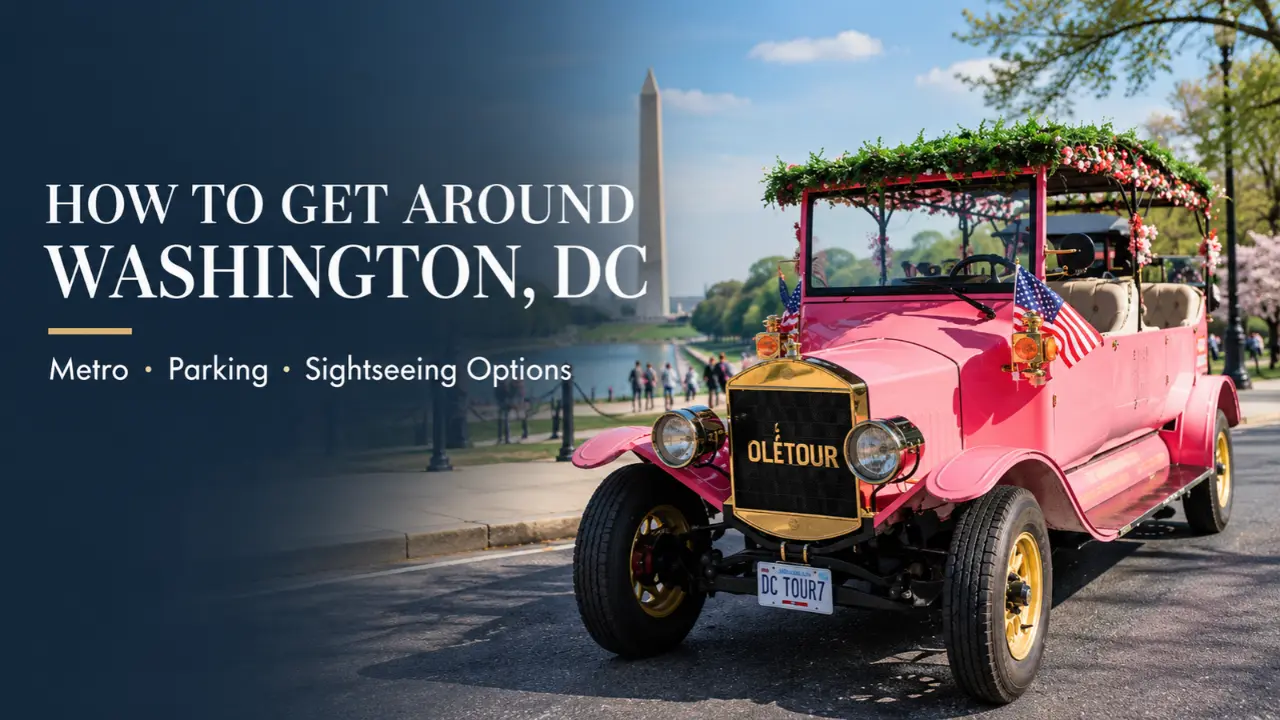
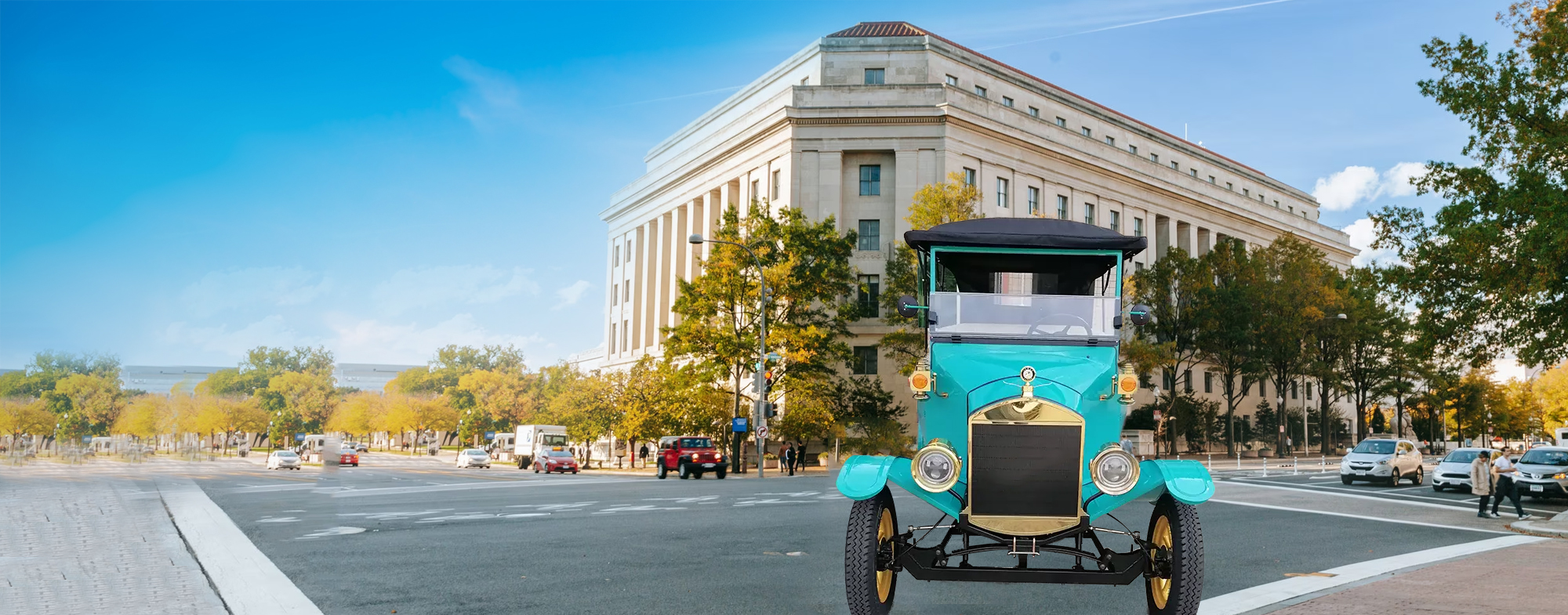
For visitors who want to see the city without walking between every landmark, a vintage-style electric cart tour is another option to consider. DC Monuments Tour offers sightseeing experiences using vintage-style electric vehicles, with tour options and vehicle sizes listed on its website. Explore the available Washington, DC tours and compare the route, duration, group size, and current availability before booking. A vehicle-based tour can make it easier to cover a wider area than a short walking route, but the exact experience depends on the itinerary. Some landmarks may be viewed from the vehicle, while others may allow a stop for photographs or a closer look.
Is a Two-Hour Tour in DC Enough?
A two-hour tour can provide a useful introduction to Washington, DC, if you focus on a selection of nearby landmarks. It is not enough to explore every monument, enter several museums, and see the city's many neighborhoods. For a short visit, prioritize the places you most want to see. For example, you might focus on the Lincoln Memorial, the Washington Monument area, and selected memorials around the National Mall. When comparing a 2 hour tour in DC, check these details:
- Which attractions are included in the route?
- How many stops are planned?
- Does the stated duration include travel and photo stops?
- Is the experience private or shared?
- Where does the tour begin and end?
- Does the schedule fit your meeting or flight plans?
The answers will help you choose a tour that fits your actual schedule instead of relying on the duration alone.
Explore the National Mall's Iconic Monuments
The National Mall is one of the most convenient areas for a first-time visitor to experience Washington, DC. Its monuments and memorials reflect American history, leadership, military service, and civil rights. You will not have time to explore every landmark in depth during a short business break. However, choosing a few highlights can give you a memorable introduction to the city.
1. Lincoln Memorial
The Lincoln Memorial is one of Washington's most recognizable landmarks. Dedicated to Abraham Lincoln, the memorial is known for its monumental architecture and its connection to American history. It is a strong choice for visitors who want a landmark with historical significance and an impressive setting for photographs. Allow extra time if you want to walk up the steps, view the interior, read the inscriptions, and explore the surrounding area. Access conditions and crowds may affect how long your visit takes.
2. Washington Monument
The Washington Monument stands prominently near the center of the National Mall. Its height makes it a useful visual reference when navigating the area. Even if you do not have time to visit the observation level, seeing the monument from the surrounding grounds can be worthwhile. If you want to go inside, check ticket availability, opening hours, and entry requirements before making plans.
3. White House
The White House is another popular stop for visitors. Many travelers want to see the exterior and take photographs from publicly accessible viewing areas. Do not assume that a sightseeing tour includes entry to the building. Public access, security arrangements, and tour routes are separate considerations, and interior visits require advance planning through the appropriate official channels.
4. World War II Memorial
The World War II Memorial honors the Americans who served during the Second World War. Its location between the Washington Monument and the Lincoln Memorial makes it a practical addition to a National Mall itinerary. If you have limited time, you can include it as part of a route that covers nearby landmarks rather than planning a separate trip.
5. Vietnam Veterans Memorial
The Vietnam Veterans Memorial offers a quieter and more reflective experience. Its polished black granite wall bears the names of American service members who died or went missing during the Vietnam War. Visitors often spend time reading names and reflecting on the memorial's meaning. If this is important to you, allow more than a quick photo stop.
6. Korean War Veterans Memorial
The Korean War Veterans Memorial features sculptures representing service members moving through a landscape. It can be included in a route with other nearby memorials. For travelers interested in American military history, this memorial adds useful context to a short National Mall visit.
7. Martin Luther King Jr. Memorial
The Martin Luther King Jr. Memorial commemorates the civil rights leader and his contribution to the struggle for equality. It is a meaningful stop for visitors interested in civil rights history. Check the time needed to reach the memorial from your other planned stops, especially if you are traveling independently.
8. Franklin Delano Roosevelt Memorial
The Franklin Delano Roosevelt Memorial covers important themes from the four presidential terms of Franklin D. Roosevelt. Its outdoor design includes different spaces and features that visitors can explore at their own pace. This memorial can take longer to appreciate than a quick photograph suggests, so include it if its history interests you and your schedule allows.
9. Jefferson Memorial
The Jefferson Memorial sits beside the Tidal Basin and honors Thomas Jefferson. Its setting can be particularly attractive for photographs, although the time needed to reach it depends on your starting point and route. If you have only a couple of hours, decide whether this stop fits your priority list before adding it to the itinerary.
10. US Capitol Building
The US Capitol Building is the seat of the United States Congress and a major architectural landmark. You can admire the building from publicly accessible exterior viewpoints, but an exterior sightseeing stop should not be confused with a guided interior visit. Check official visitor information if you want to tour the building inside.
Enjoy DC Evening Sightseeing
Business schedules do not always leave room for daytime activities. Meetings can run late, conferences may fill the afternoon, and clients may expect dinner in the evening. That is why evening sightseeing can be a useful option. Washington, DC's monuments can look especially striking after dark. Lighting, open spaces, and quieter moments around selected memorials can create a different experience from a daytime visit.
Why See the Monuments at Night?
Evening sightseeing can offer several advantages:
- Fits around meetings: You can plan an outing after your workday, depending on tour schedules.
- Distinctive photographs: Illuminated monuments can provide a different backdrop for photographs.
- A different atmosphere: Some memorials feel more peaceful in the evening, although visitor numbers vary.
- A structured activity: A guided route can help you make the most of a limited evening window.
Evening access, lighting, road conditions, and tour routes can change. Check current details before setting out.
Which Landmarks Should You Prioritize?
For a short evening visit, consider a route that includes selected highlights such as the Lincoln Memorial, the World War II Memorial, the Washington Monument area, or other nearby sites. The ideal route depends on your starting point, the available time, and the current tour itinerary. Avoid assuming that every landmark will be a designated stop on every night tour.
Book an Evening Tour That Fits Your Schedule
If you want to explore after work, review the available DC night tour options. Confirm the start time, duration, route, meeting point, and availability before making a reservation. Leave enough time to return to your hotel or reach a dinner reservation. If you have an early flight the next morning, a shorter outing may be more practical than a late evening across the city.
Consider a Private Sightseeing Tour
A private sightseeing tour may be a good fit for business travelers who want to keep their plans focused. Instead of joining an itinerary that may not match your interests, you can review a private option and choose one that suits your group and available time. Private tours can be especially useful for colleagues traveling together, visiting clients, or hosting out-of-town business partners. They also provide an alternative to organizing several separate transport arrangements.
Choose a Vehicle That Fits Your Group
DC Monuments Tour lists private tour options with different vehicle capacities. Depending on current availability, options may include:
Check the current listing for passenger capacity, availability, route details, and booking conditions. Choose a vehicle based on your actual group size rather than assuming that every option will be available at your preferred time.
Questions to Ask Before Booking
Before reserving a private tour, confirm:
- How long does the tour last?
- Which monuments and memorials are included?
- Are photo stops included, and how much time is available at each stop?
- Where does the tour begin and end?
- Is hotel pickup offered for the specific tour?
- What happens if weather or road closures affect the route?
- What accessibility limitations should your group know about?
Vintage-style electric cart tours are not wheelchair accessible. If someone in your group has mobility requirements, discuss suitable arrangements with the tour operator before booking. For more information about the experience, read the guide to private vintage cart tours in Washington, DC.
Visit a Museum if Your Schedule Allows
If you have a longer break between meetings, consider visiting one museum. Washington, DC, has a range of museums covering history, art, science, culture, and American government. The key is to select one institution that matches your interests instead of attempting to visit several in a short window.
Choose One Museum in Advance
Before leaving your hotel or meeting venue, check the museum's official website for:
- Opening and closing times.
- Timed-entry tickets or reservation requirements.
- Security procedures and restrictions on bags.
- Current exhibitions and areas that may be closed.
- Travel time from your location.
Allow time for entry and security. A museum visit can take longer than expected, especially during busy periods or when a special exhibition attracts large crowds.
When Is a Museum Better Than a Monument Tour?
A museum may be the better choice if you have several uninterrupted hours and a particular interest in art, science, history, or culture. A guided monument tour may be more practical if you want to see several outdoor landmarks without spending most of your time inside one building. Your decision should depend on what you want to experience, not on trying to check the largest number of attractions off a list.
Enjoy a Quick Meal Near the Attractions
Sightseeing is easier when you plan food and rest breaks around your schedule. If you have only a short window, choose a place near your route rather than traveling across the city for a meal.
Plan Lunch Around Your Meeting Schedule
If you have a midday break, look for cafés, casual restaurants, or quick-service options near your office, hotel, or planned sightseeing area. Check opening hours and expected wait times before leaving. A sit-down meal may require more time than you expect during a busy weekday. If your next meeting starts soon, keep the meal simple and close to your destination.
Use Dinner as a Natural End to Evening Sightseeing
If you plan to see the monuments after work, consider eating before or after the tour. Make sure the restaurant's location and reservation time fit the sightseeing route. For a business dinner, leave a buffer for traffic and unexpected delays. A realistic schedule is more useful than an itinerary that looks perfect on paper but leaves no room for changes.
Sample Itineraries for Business Travelers
The following sample itineraries can help you plan your free time. They are planning examples, not guaranteed tour schedules. Actual travel time depends on your starting location, traffic, weather, crowd levels, and attraction access.
Itinerary 1: One Hour Between Meetings
Best for: Travelers who need to return to work quickly.
- First 10 minutes: Travel to a nearby landmark or viewing area.
- Next 35 minutes: Explore one site and take photographs.
- Final 15 minutes: Return to your meeting venue or hotel.
Keep the plan local. Do not try to cross the entire National Mall or enter a museum if you have only an hour.
Itinerary 2: A Two-Hour Washington, DC Tour
Best for: First-time visitors with a short afternoon break.
- Opening segment: Start at the confirmed meeting point and review the route.
- Main sightseeing segment: Visit selected landmarks, such as the Lincoln Memorial and the World War II Memorial, if they are included in the chosen itinerary.
- Photo opportunities: Use available stops for photographs and brief exploration.
- Final segment: Return to the designated end point and allow time to reach your next commitment.
A two-hour tour can provide a useful overview, but it will not allow an in-depth visit to every monument. Confirm the route and duration when booking.
Itinerary 3: Three Hours After a Conference
Best for: Business travelers who finish work in the afternoon.
- First two hours: Take a guided sightseeing tour or follow a compact route around selected National Mall landmarks.
- Next 30 minutes: Enjoy a short walk or stop for photographs, depending on your tour and location.
- Final 30 minutes: Have a quick meal or return to your hotel.
This plan works best when your starting point is close to the tour route. If you are traveling from a distant conference venue, account for the additional journey.
Itinerary 4: Evening Monument Sightseeing
Best for: Visitors whose workday ends late.
- Before the tour: Finish your meetings and travel to the confirmed starting point.
- During the tour: Explore selected illuminated monuments and memorials along the current route.
- After sightseeing: Enjoy dinner or return to your accommodation.
Check the available night tour schedule before building the rest of your evening around it.
Itinerary 5: A Half-Day Break
Best for: Travelers with a longer gap between appointments.
- First two hours: Explore selected monuments with a guided tour or a planned route.
- Next 60 minutes: Visit one museum or spend more time at a landmark that interests you.
- Final 30 minutes: Eat, rest, and travel back to your next destination.
A half-day break gives you more flexibility, but it is still wise to limit the number of major activities. Check museum hours and tour availability before finalizing the itinerary.
Tips for Exploring DC Between Meetings
A little planning can help you avoid spending your limited free time on logistics.
1. Check Your Actual Free Time
Do not plan around the gap between two calendar appointments alone. Include the time needed to leave the meeting, reach the attraction, and return to your next destination. If your meeting ends at 2 p.m. and the next begins at 5 p.m., you do not necessarily have three full hours for sightseeing.
2. Choose a Compact Route
The National Mall contains many major landmarks, but walking distances between them can be substantial. Choose a route based on your priorities and avoid adding distant attractions without checking travel time. For additional planning ideas, read this practical Washington, DC itinerary guide.
3. Check Traffic and Road Closures
Traffic can affect travel around downtown Washington, DC, particularly during weekday commuting periods and major events. Check current conditions before leaving and leave a buffer before your next appointment. Memorial events, demonstrations, security restrictions, and construction may also affect access to some areas.
4. Book in Advance When Possible
If you have only a narrow window, confirm your tour rather than relying on an unverified schedule. Check the current departure time, meeting point, duration, route, and cancellation terms before paying. Start with the available DC tour options and select the experience that best matches your schedule.
5. Wear Comfortable Shoes and Dress for the Weather
Even when taking a vehicle-based tour, you may need to walk during photo stops or while exploring a memorial. Wear comfortable footwear and check the forecast. Washington's summers can be hot and humid, while winters can be cold and windy. Carry water when appropriate and dress in layers when the temperature may change.
6. Keep Your Work Essentials Secure
Business travelers often carry laptops, documents, chargers, and other work equipment. Consider whether you need to bring these items on the outing or whether they can be stored securely at your accommodation. Follow the venue's rules for bags and restricted items if you plan to visit a museum or government building.
7. Do Not Assume a Tour Includes Interior Access
Seeing a landmark from the outside is different from entering it. A sightseeing route may pass a building or provide an exterior view without including admission or an interior tour. Check official attraction information if entering a building is important to you.
8. Confirm Accessibility Requirements
If you or someone in your group has mobility needs, check walking distances, step-free access, seating, and vehicle accessibility in advance. Vintage-style electric cart tours offered by DC Monuments Tour are not wheelchair accessible. For additional information, review this Washington, DC accessibility guide.
9. Keep Your Plans Flexible
A delayed meeting or an unexpected traffic jam can quickly change your schedule. Choose a primary activity and keep an optional stop in reserve rather than committing to a long list of attractions. If your free time becomes shorter than expected, one well-chosen landmark can still make the break worthwhile.
Explore Washington, DC with DC Monuments Tour
If your business trip gives you only a few hours to explore, DC Monuments Tour offers a way to discover selected Washington, DC landmarks through vintage-style electric cart sightseeing experiences. Depending on the tour you choose, a guided route may help you see several monuments without planning every part of the journey yourself. Available experiences and vehicle options can vary, so review the current listings before booking. You can explore the day tour, consider the night tour, or compare the available private sightseeing tours. Before you reserve, check the tour duration, route, meeting point, passenger capacity, and current availability. If you are coordinating an outing for colleagues or visiting clients, confirm the group size and any specific requirements with the operator. To explore your options, visit the DC Monuments Tour website or use the contact page for questions about your plans. A business trip may not leave time to see everything Washington, DC, offers. But with a realistic schedule and a focused route, you can still experience some of the city's most memorable landmarks between professional commitments.