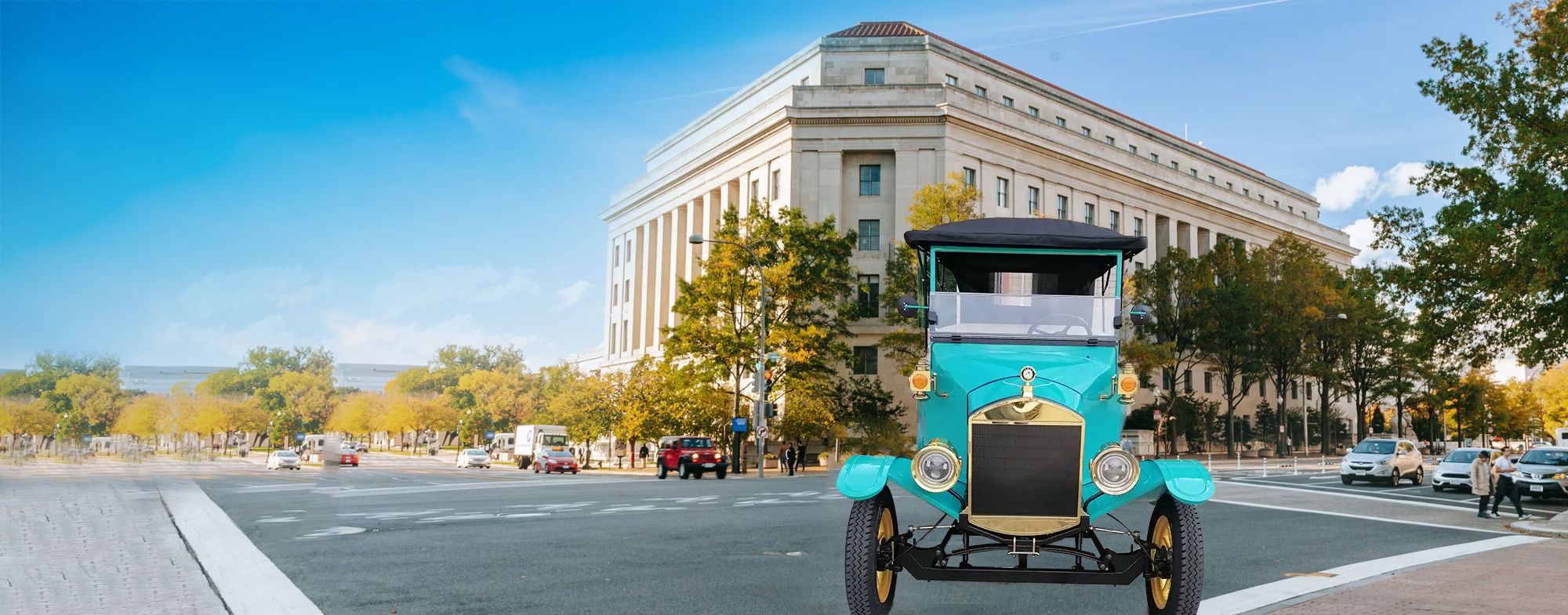
The Korean War Veterans Memorial Tour offers visitors a powerful journey through one of Washington DC's most emotional memorials. Located beside the Lincoln Memorial, the site honors the Americans who served during the Korean War through lifelike soldier statues, the Wall of Remembrance, the Pool of Remembrance, and the famous inscription "Freedom Is Not Free." A guided luxury golf cart tour makes exploring the memorial and nearby National Mall landmarks comfortable, informative, and accessible for visitors of all ages.

Table of Contents
- Introduction
- Quick Facts
- History of the Korean War Veterans Memorial
- Why Was the Memorial Built?
- The Meaning Behind the Memorial's Design
- The Famous Stainless Steel Soldiers
- The Wall of Remembrance
- The Pool of Remembrance
- What to Expect on a Guided Tour
- Best Time to Visit
- Visitor Tips
- Key Takeaways
- Conclusion
Introduction
Some memorials impress you with their size. Others inspire through architecture. The Korean War Veterans Memorial does something different-it creates an emotional connection that stays with visitors long after they leave.
When I first visited the memorial, I expected another monument among the many famous landmarks on the National Mall. Instead, I found myself standing quietly among nineteen larger-than-life stainless steel soldiers, each appearing to move cautiously through rugged Korean terrain. Their expressions, equipment, and formation make the memorial feel remarkably human rather than symbolic.
Located near the Lincoln Memorial and the Reflecting Pool, the Korean War Veterans Memorial honors the nearly 1.8 million Americans who served during the Korean War. It recognizes those who sacrificed their lives, those who were wounded, and the many who never returned home.
For first-time visitors to Washington DC, this memorial is often one of the most meaningful stops on a National Mall itinerary. Whether you're traveling with family, visiting as a couple, exploring solo, or looking for a comfortable sightseeing experience, a guided Washington DC memorial tour by luxury vintage golf cart allows you to appreciate the stories behind the memorial without the long walks required by traditional sightseeing.
Unlike many attractions that can be appreciated with a quick photograph, the Korean War Veterans Memorial rewards visitors who understand its symbolism, history, and design. Every statue, inscription, and landscape element was carefully created to tell the story of a conflict often called "The Forgotten War."
Quick Facts
| Fact | Details |
|---|---|
| Location | West Potomac Park, National Mall, Washington DC |
| Dedicated | July 27, 1995 |
| Honors | U.S. Armed Forces who served during the Korean War |
| Main Feature | 19 Stainless Steel Soldier Statues |
| Designer | Cooper-Lecky Architects with Frank Gaylord (statues) |
| Open | 24 Hours Daily |
| Admission | Free |
| Recommended Visit Time | 30–45 Minutes (Longer on Guided Tours) |
The memorial is administered by the National Park Service and forms part of the National Mall's collection of iconic monuments. Since its dedication in 1995, millions of visitors from around the world have come here to reflect on the sacrifices made during the Korean War.
History of the Korean War Veterans Memorial
The Korean War began on June 25, 1950, when North Korean forces crossed the 38th Parallel and invaded South Korea. Within days, the United States joined a United Nations coalition to help defend South Korea, beginning a conflict that would last just over three years.
Although the war ended with an armistice in July 1953 rather than a formal peace treaty, its impact was enormous. More than 36,000 Americans lost their lives, over 100,000 were wounded, and thousands more were listed as prisoners of war or missing in action.
Despite these sacrifices, the Korean War often received less public recognition than World War II or the Vietnam War. Veterans frequently described it as "The Forgotten War" because public attention shifted quickly after the conflict ended.
Years later, veterans' organizations successfully advocated for a national memorial dedicated specifically to those who served in Korea. Congress authorized the memorial in the 1980s, and after years of planning and construction, it was officially dedicated on July 27, 1995-the 42nd anniversary of the armistice agreement.
Today, the memorial serves not only as a place of remembrance but also as an educational landmark that helps newer generations understand the historical significance of the Korean War and the sacrifices made by military personnel and their families.
You May Also Like: Explore UFC 250 White House Fight in Washington DC With DC Monuments Tour
Why Was the Memorial Built?
The Korean War Veterans Memorial was created with a clear purpose: to ensure that the service and sacrifice of Korean War veterans would never be forgotten.
Unlike victory monuments that celebrate military success, this memorial emphasizes courage, endurance, and the human cost of war. Its design recognizes not only those who died but also those who survived, returned home with lifelong injuries, or were forever changed by their experiences.
The memorial also highlights the international nature of the conflict. Twenty-two nations contributed forces under the United Nations Command, making the Korean War one of history's largest multinational military efforts.
Perhaps the memorial's most powerful message appears in just four simple words engraved in stone:
Freedom Is Not Free.
Those words have become one of the most recognized quotations on the National Mall because they summarize the sacrifices represented throughout the memorial.
The Meaning Behind the Memorial's Design
Unlike many traditional monuments built around a single statue or towering structure, the Korean War Veterans Memorial tells its story through movement, landscape, and symbolism.
The designers wanted visitors to feel as though they were witnessing a patrol moving across the rugged Korean countryside. Rather than standing in formal rows, the statues appear to advance cautiously through fields of juniper bushes that represent Korea's mountainous terrain.
The memorial combines several architectural elements into one unified experience, including:
- Nineteen larger-than-life stainless steel soldiers.
- A reflective granite wall featuring etched images of military personnel.
- The Pool of Remembrance.
- The United Nations Wall.
- The famous "Freedom Is Not Free" inscription.
Each feature contributes to the memorial's emotional impact. Together, they create one of the National Mall's most immersive and reflective spaces.
► MY POV: Unlike many monuments that are designed to impress from a distance, the Korean War Veterans Memorial becomes more meaningful the closer you get. Standing among the soldier statues changes the experience completely-you begin to notice their facial expressions, equipment, and formation, making the history feel personal rather than distant.
The Famous Stainless Steel Soldiers
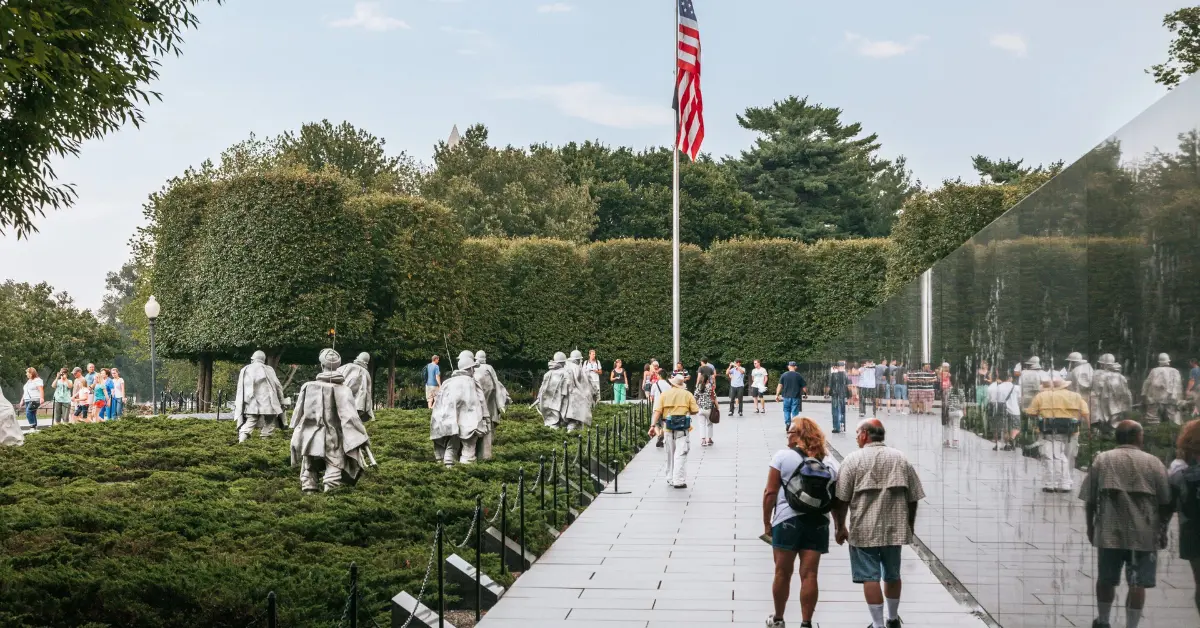
The most recognizable feature of the Korean War Veterans Memorial is its 19 stainless steel soldier statues, created by renowned sculptor Frank Gaylord. Standing slightly larger than life, these statues depict members of the U.S. Army, Marine Corps, Navy, and Air Force cautiously moving through rugged Korean terrain.
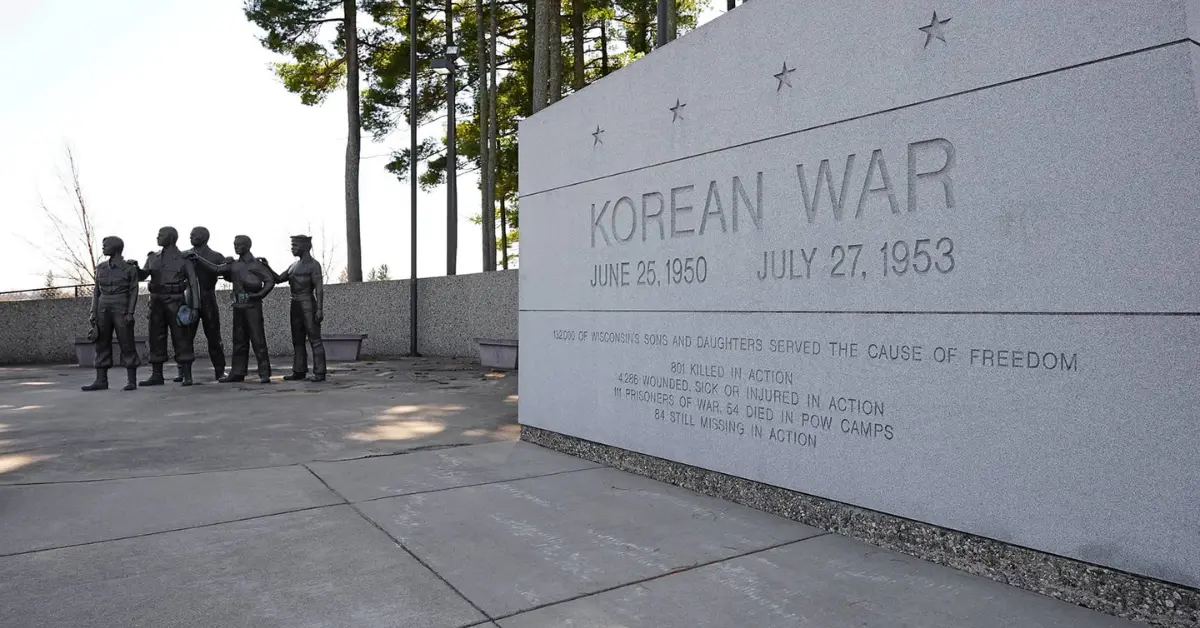
Each soldier has a unique facial expression, posture, and equipment, reflecting the harsh realities of combat. Rather than standing in formation, the figures appear to patrol through fields of low juniper bushes, symbolizing Korea's mountainous landscape. This design creates an immersive experience that allows visitors to feel as though they are walking alongside the troops.
One of the memorial's most fascinating design elements is the reflection of the statues in the adjacent granite wall. While only 19 statues physically stand in the memorial, their reflections create the visual impression of 38 soldiers-symbolically referencing the 38th Parallel, the boundary that divided North and South Korea.
► MY POV: Standing among these statues is unlike visiting a traditional monument. Their realistic expressions and movement create an emotional connection that photographs simply cannot capture. It's one of the few memorials where visitors often pause in complete silence.
You May Also Like: World War II Memorial Tour in Washington DC
The Wall of Remembrance
Adjacent to the patrol of soldiers stands the Wall of Remembrance, one of the memorial's most meaningful features. Added in 2022, the wall honors those who lost their lives during the Korean War by listing the names of:
- 36,574 U.S. service members who died during the Korean War.
- 7,174 service members who remain Missing in Action (MIA).
- More than 7,000 Korean Augmentation to the United States Army (KATUSA) personnel who gave their lives.
The polished granite wall transforms overwhelming statistics into individual stories. Visitors frequently search for the names of family members, friends, or fellow veterans, making this one of the most personal places on the National Mall.
Beyond the names, the wall serves as a reminder that every casualty represented a family forever changed by the conflict.
The Pool of Remembrance
Near the center of the memorial lies the Pool of Remembrance, a quiet circular reflecting pool designed to encourage contemplation.
Surrounded by trees, benches, and engraved stones, this peaceful space offers visitors an opportunity to reflect on the sacrifices represented throughout the memorial. The gentle sound of flowing water contrasts beautifully with the dramatic soldier statues, creating an atmosphere of respect and remembrance.
Many veterans and family members choose to spend extra time here after walking through the memorial, making it one of the most emotionally significant locations within the site.
What to Expect on a Guided Korean War Veterans Memorial Tour
While the memorial is free to visit independently, joining a private luxury vintage golf cart tour provides a far richer experience. Professional guides explain the historical events, symbolism, and personal stories behind the memorial, helping visitors appreciate details they might otherwise overlook.
A guided tour typically includes:
- The history and causes of the Korean War.
- Stories behind the 19 stainless steel soldier statues.
- The symbolism of the reflective granite wall.
- The significance of the Wall of Remembrance.
- The meaning behind the inscription "Freedom Is Not Free."
- Connections to nearby National Mall memorials and monuments.
Because the tour is conducted by luxury vintage golf cart, visitors can comfortably explore multiple Washington DC landmarks without spending hours walking between memorials. This makes the experience especially popular among families, couples, senior travelers, and visitors with limited mobility.
► MY POV: The Korean War Veterans Memorial is powerful on its own, but hearing the stories behind the memorial transforms the experience completely. Understanding why each design element exists makes visitors appreciate the memorial on a much deeper level.
You May Also Like: Why the Franklin Delano Roosevelt Memorial Is One of Washington DC's Most Meaningful Monuments
Best Time to Visit the Korean War Veterans Memorial
The memorial is open 24 hours a day, allowing visitors to experience it under different lighting conditions throughout the day. Each time offers a unique atmosphere.
| Time of Day | Visitor Experience |
|---|---|
| Early Morning | Peaceful atmosphere with fewer crowds and cooler temperatures. |
| Late Morning | Ideal for combining the memorial with other National Mall attractions. |
| Sunset | Excellent lighting for photography and dramatic views. |
| Evening | Illuminated statues create one of the most emotional experiences on the National Mall. |
Many experienced visitors recommend visiting during sunset or after dark, when carefully positioned lighting enhances the realism of the stainless steel soldiers and creates an unforgettable atmosphere.
Visitor Tips for First-Time Travelers
Planning ahead can make your visit more enjoyable and meaningful.
- Visit early in the morning or near sunset for fewer crowds and better photography.
- Take time to read the inscriptions instead of simply walking through the memorial.
- Walk around the entire memorial to appreciate the sculptures from different perspectives.
- Spend a few quiet moments at the Pool of Remembrance.
- Combine your visit with nearby landmarks such as the Lincoln Memorial, Vietnam Veterans Memorial, and World War II Memorial.
- Carry water and wear comfortable shoes if exploring the National Mall on foot.
- Choose a guided luxury golf cart tour if you want to visit multiple monuments comfortably while learning their history from an expert guide.
Key Takeaways
- The Korean War Veterans Memorial honors the service and sacrifice of Americans and United Nations forces who served during the Korean War.
- The memorial's 19 stainless steel soldier statues symbolize troops advancing across difficult Korean terrain.
- The Mural Wall contains more than 2,400 etched photographic images representing those who served.
- The Pool of Remembrance provides a peaceful place for reflection in the center of the memorial.
- Guided tours offer historical context that helps visitors better understand the significance of each feature.
- Early morning and evening visits provide the most comfortable weather, softer lighting, and fewer crowds.
- A luxury vintage golf cart tour offers a convenient way to visit the memorial while also seeing other National Mall landmarks.
Conclusion
The Korean War Veterans Memorial Tour is far more than a stop on the National Mall-it is a moving tribute to the courage, sacrifice, and resilience of those who served during the Korean War. Every part of the memorial, from the lifelike soldier statues to the reflective Mural Wall and the tranquil Pool of Remembrance, tells an important story about a conflict often called the "Forgotten War."
Whether you're visiting Washington, DC for the first time, traveling with family, exploring as a couple, or discovering American history on your own, this memorial offers one of the most meaningful experiences in the nation's capital.
Choosing a private luxury vintage golf cart tour allows you to experience the memorial comfortably while learning fascinating historical insights from a knowledgeable guide. Instead of simply seeing the monument, you'll understand the stories behind every sculpture, inscription, and design element.
If you're planning a Washington, DC sightseeing itinerary, the Korean War Veterans Memorial deserves a place near the top of your list. Combined with nearby landmarks such as the Lincoln Memorial, Vietnam Veterans Memorial, and World War II Memorial, it creates an unforgettable journey through American history.
You May Also Like: Private Martin Luther King Jr. Memorial Tour in Washington DC by Luxury Vintage Golf Cart