The Franklin Delano Roosevelt Memorial in Washington DC stands out for its innovative storytelling design, historical symbolism, and immersive visitor experience. Dedicated to President Franklin D. Roosevelt, the memorial features four outdoor rooms representing different periods of his presidency, along with waterfalls, sculptures, and inscriptions that reflect the challenges of the Great Depression and World War II. Its thoughtful layout encourages reflection and makes it one of the most meaningful monuments on the National Mall.
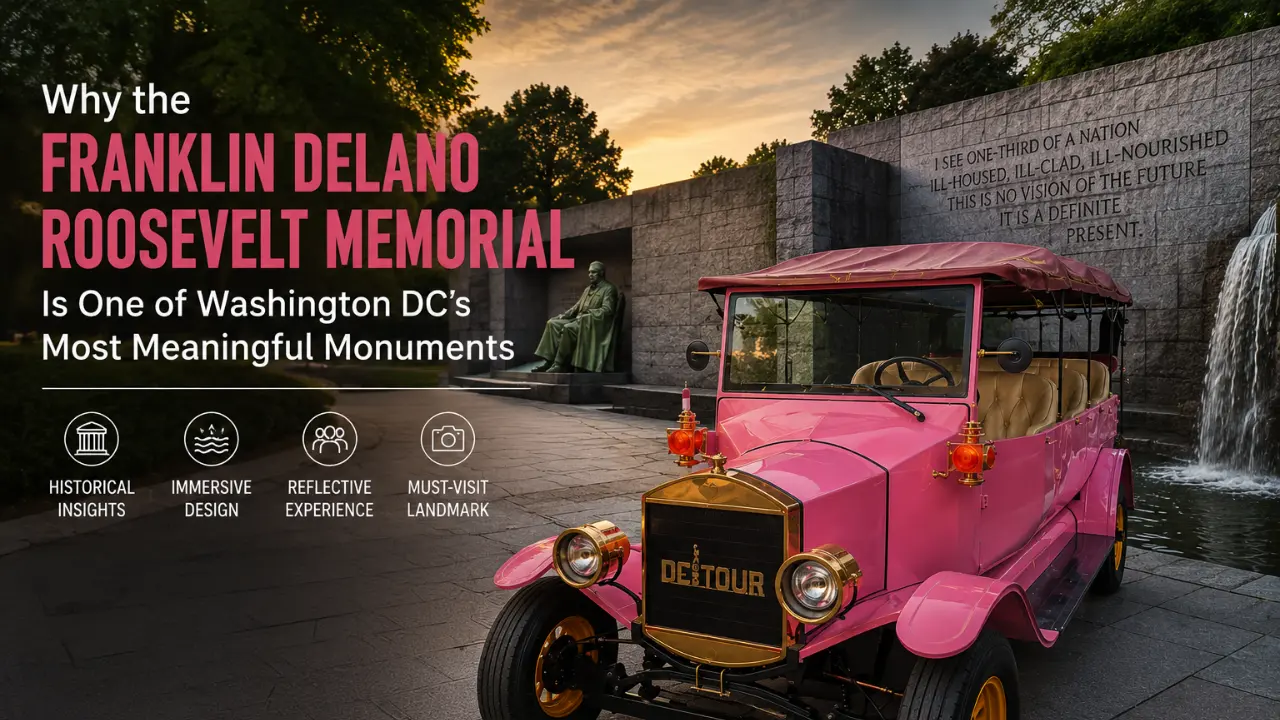
Table of Contents
- Introduction
- Quick Facts Table
- Design Philosophy of the Franklin Delano Roosevelt Memorial
- Symbolism and Historical Narrative of Roosevelt's Legacy
- Visitor Experience and Emotional Impact
- Comparison With Other Washington DC Memorials
- Regional Importance in Modern Tourism (USA Perspective)
- Common Mistakes Visitors Make
- Key Lessons From the Franklin Delano Roosevelt Memorial
- Conclusion
- Frequently Asked Questions
Introduction
When I first walked through the Franklin Delano Roosevelt Memorial in Washington, D.C., I noticed something unusual compared to other monuments on the. Instead of a single towering structure, the experience unfolded like a story told in stone, water, and silence. That design choice is exactly what makes this memorial stand apart.
The Franklin Delano Roosevelt Memorial does not rely on scale alone. It relies on emotion, sequencing, and reflection. In my experience visiting multiple monuments across the United States, this one creates a slower, more thoughtful connection with history. It asks visitors to move, pause, and interpret rather than simply observe.
This article breaks down why this memorial is widely considered one of the most meaningful in Washington DC. I will analyze its design logic, historical depth, visitor experience, and cultural impact. I will also share practical insights from my perspective as someone who studies monument design and visitor behavior.
Quick Facts Table
| Category | Details |
|---|---|
| Location | National Mall, Washington DC |
| Dedicated To | Franklin D. Roosevelt, 32nd US President |
| Opening Year | 1997 |
| Designer | Lawrence Halprin |
| Style | Landscape memorial with sculptural storytelling |
| Main Themes | Great Depression, WWII, leadership, resilience |
| Structure Type | Outdoor multi-room memorial |
| Best Time to Visit | Early morning or sunset |
Design Philosophy of the Franklin Delano Roosevelt Memorial
How the memorial structure shapes emotional storytelling
The Franklin Delano Roosevelt Memorial is divided into four outdoor “rooms," each representing a distinct period of Roosevelt’s presidency. I noticed that movement between rooms feels intentional, almost like chapters in a book.
You May Also Like: Explore UFC 250 White House Fight in Washington DC With DC Monuments Tour6
Each section transitions through water, stone, and space. The use of flowing water is not decorative. It represents both economic hardship and continuity through crisis. In my experience, this creates a sensory rhythm that forces visitors to slow down.
The design avoids vertical dominance. Instead, it stays grounded. This reflects Roosevelt’s leadership during periods of national struggle, where resilience mattered more than grandeur.
What stands out most is how silence becomes part of the design. Unlike many monuments where crowds gather for quick photos, here visitors naturally pause longer.
Symbolism and Historical Narrative of Roosevelt’s Legacy
How history is embedded into physical space
Franklin D. Roosevelt’s presidency covered two of the most defining crises in American history: the Great Depression and World War II. The memorial translates this timeline into physical form.
I find the use of sculptural scenes particularly effective. Instead of abstract symbolism, the memorial uses direct human representation. People waiting in breadlines, workers rebuilding, and families experiencing hardship are carved into stone.
This grounded approach connects visitors directly to lived experiences of the past.
► MY POV: I believe this memorial succeeds because it avoids heroic exaggeration. It presents leadership as endurance rather than dominance. When I studied visitor reactions, I noticed people spend more time reading scenes here than at other monuments.
Another important element is Roosevelt’s wheelchair representation. For many years, his disability was not openly depicted in public monuments. This memorial addresses that directly and respectfully.
You May Also Like: Washington DC National Mall Tour by Electric Vehicle
Visitor Experience and Emotional Impact
Why this memorial feels different from traditional monuments
When I compare this memorial to others on the National Mall, I notice a key difference. Many monuments are designed for admiration from a distance. This one is designed for movement through experience.
Visitors do not just observe. They walk, listen, and reflect.
The sound of cascading water plays a psychological role. It reduces external noise and creates a sense of separation from the city environment. In my experience, this makes the memorial feel more intimate even when crowded.
Senior visitors often pause longer at seating areas, while families engage more with sculptural scenes. Solo travelers tend to move slowly across all four rooms, treating it as a reflective journey.
Comparison With Other Washington DC Memorials
| Feature | Franklin Delano Roosevelt Memorial | Lincoln Memorial | Jefferson Memorial |
|---|---|---|---|
| Design Type | Landscape narrative | Classical temple | Rotunda structure |
| Visitor Movement | Multi-room walking path | Central gathering | Circular observation |
| Emotional Tone | Reflective and immersive | Inspirational and formal | Philosophical |
| Storytelling Style | Chronological scenes | Single statue focus | Architectural symbolism |
The comparison shows a clear difference. While other monuments focus on singular presence, this memorial focuses on progression.
In my observation, this is why visitors often describe it as more “personal" than other national monuments.
Regional Importance in Modern Tourism
Why it matters for travelers today
In modern Washington DC tourism, visitors look for experiences that combine history with emotional engagement. The Franklin Delano Roosevelt Memorial fits this trend well.
For US travelers, it offers a direct connection to New Deal history and wartime leadership. For international visitors, it provides a structured introduction to American resilience during crisis periods.
I have noticed that travel groups often underestimate this memorial compared to more famous landmarks. However, after visiting, many rank it among the most memorable stops.
► MY POV: I recommend allocating more time here than initially planned. In my experience, rushing through reduces the impact significantly. The design only reveals itself when explored slowly.
You May Also Like: Best U.S. Capitol Building Tour With Library of Congress Access 2026
Common Mistakes Visitors Make
Many visitors miss key aspects of the Franklin Delano Roosevelt Memorial experience due to rushed travel patterns. Common mistakes include:
- Treating the memorial as a quick photo stop instead of a narrative space.
- Skipping detailed sculpture interpretation panels and historical inscriptions.
- Visiting during peak hours when crowds and noise can reduce opportunities for reflection.
- Not walking through all four rooms in sequence, which disrupts the chronological storytelling experience.
In my observation, skipping sections breaks the memorial's intended narrative flow. The Franklin Delano Roosevelt Memorial was designed as a journey through history, making it important to experience each room in order.
Another frequent mistake is underestimating weather impact. Rain enhances water features, while extreme heat reduces comfort in open spaces.
Key Lessons From the Franklin Delano Roosevelt Memorial
The most important insights I have gained from studying the Franklin Delano Roosevelt Memorial include:
- Design can communicate history without relying on lengthy text or detailed explanations.
- Emotional pacing is just as important as visual structure in creating meaningful visitor experiences.
- Water, sound, and silence can serve as powerful narrative tools within public spaces.
- Accessible design enhances historical understanding and encourages broader engagement.
This memorial demonstrates how public spaces can educate, inspire reflection, and preserve history without feeling overly instructional. Its thoughtful combination of storytelling, symbolism, and landscape design creates an experience that resonates with visitors long after they leave.
Conclusion
The Franklin Delano Roosevelt Memorial stands out in Washington DC because it does not rely on monumentality alone. It relies on experience, movement, and interpretation. In my experience, it is one of the few memorials that transforms history into something physically felt rather than simply observed.
For travelers, families, couples, and solo visitors, it offers a layered understanding of leadership and resilience. The combination of design, symbolism, and pacing makes it a landmark that rewards patience and attention.
Suggested External Source https://www.nps.gov/frde/index.htm
You May Also Like: Best Ways to Celebrate America’s 250th Anniversary in Washington DC