This Washington DC accessibility guide explains how to explore the National Mall comfortably, covering wheelchair access, accessible transportation, parking, Smithsonian museums, restrooms, route planning, and ways to reduce walking while enjoying major monuments and memorials.
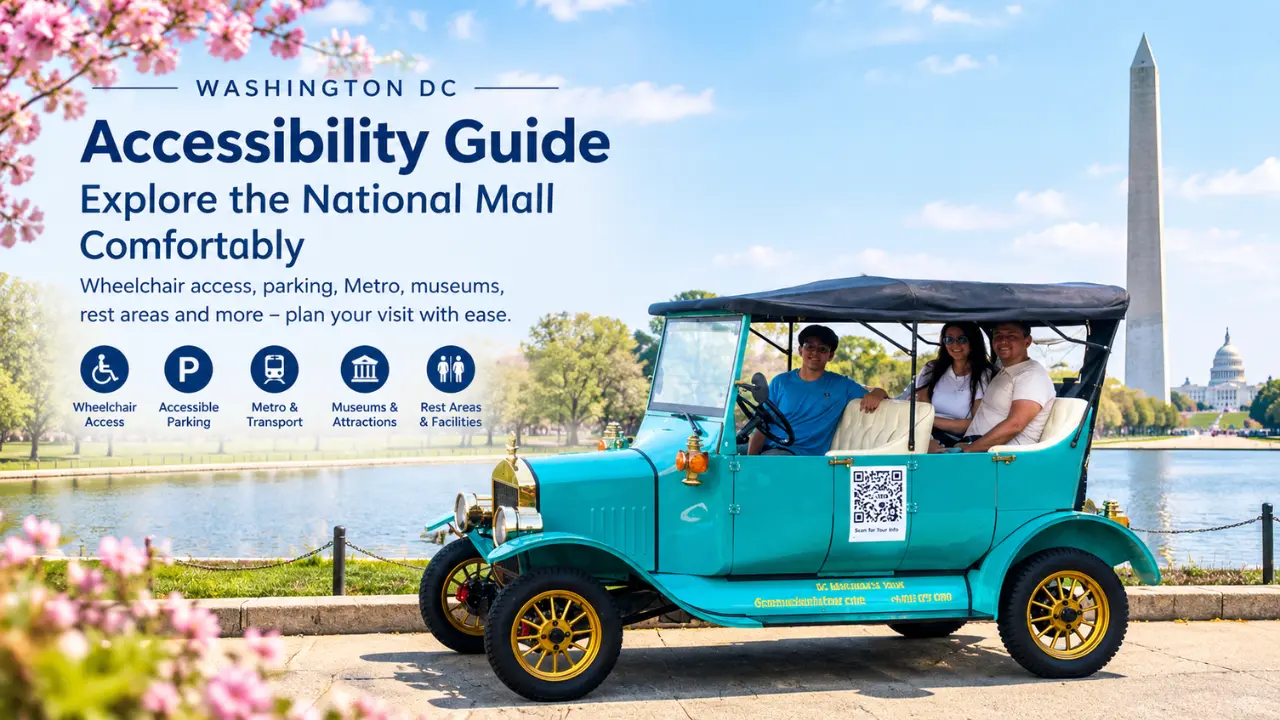
Table of Contents
- Introduction
- Why Accessibility Planning Matters at the National Mall
- Quick Accessibility Facts for the National Mall
- Wheelchair Accessibility at the National Mall
- Can You Borrow a Wheelchair?
- How to Plan an Accessible National Mall Route
- How to Reduce Walking During Your Visit
- Using Washington DC Metro for an Accessible Visit
- Accessible Parking Near the National Mall
- Accessibility at Smithsonian Museums
- Other Smithsonian Accessibility Services
- Planning an Accessible Museum Day
- Accessibility for Visitors With Sensory or Communication Needs
- Restrooms and Rest Stops
- What Is the Best Time for a Comfortable Visit?
- Plan Around Washington DC Weather
- Can a Private Tour Make the National Mall Easier?
- Questions to Ask Before Booking a Sightseeing Tour
- Sample Comfortable National Mall Itinerary
- 10 Tips for a More Comfortable National Mall Visit
- Private DC Tour Options for Different Group Sizes
- Who Can Benefit From Accessibility Planning?
- Key Takeaways
- Conclusion
Introduction
Exploring the National Mall can be an enjoyable experience for visitors with mobility, sensory, or other accessibility needs, but planning matters. The National Park Service confirms that the major monuments and memorials are wheelchair accessible, while also noting that some historic facilities may not provide ideal accessibility.
This guide explains how to plan a more comfortable National Mall visit, including accessible routes, wheelchairs, transportation, parking, restrooms, Smithsonian museums, and ways to reduce unnecessary walking.
Why Accessibility Planning Matters at the National Mall
The National Mall is a large outdoor area rather than a single attraction. The monuments, memorials, museums, sidewalks, entrances, parking areas, and transportation connections are spread across a substantial area.
Although major monuments are wheelchair accessible, the National Park Service notes that accessibility is not always ideal because many facilities are historic.
A comfortable visit therefore starts with planning the route instead of simply arriving at the Mall and deciding where to go.
Quick Accessibility Facts for the National Mall
| Accessibility Feature | What Visitors Should Know |
|---|---|
| Major monuments | Major monuments and memorials are wheelchair accessible. |
| Wheelchair loans | Limited loaner wheelchairs are available at selected memorials on a first-come, first-served basis. |
| ASL interpretation | Available free by request, with advance notice recommended. |
| Large print | Large-print material is available at selected locations. |
| Smithsonian museums | Smithsonian buildings have at least one accessible entrance. |
| Metro | WMATA states that all Metro Rail stations provide a step-free path from the street to the train. |
| Accessible parking | Designated accessible parking spaces are available at various locations around the National Mall. |
The NPS accessibility information was updated July 21, 2026, while WMATA's accessibility information was updated July 31, 2026.
Wheelchair Accessibility at the National Mall
The National Park Service states that all major monuments and memorials at the National Mall are wheelchair accessible.
However, being accessible does not always mean that every route between attractions will feel equally convenient. The distance between landmarks can still make a full-day itinerary tiring.
If you use a wheelchair or mobility device, consider grouping nearby attractions together and using accessible transportation between areas.
Can You Borrow a Wheelchair?
The National Park Service has a limited number of loaner wheelchairs available at the Korean War Veterans Memorial, Vietnam Veterans Memorial, Franklin Delano Roosevelt Memorial, and World War II Memorial. They are offered on a first-come, first-served basis.
The NPS also states that visitors can bring their own wheelchair or rent one from a local vendor.
Because availability is limited, bringing your own mobility device or arranging a rental in advance can provide more certainty.
How to Plan an Accessible National Mall Route
Instead of trying to cover every monument in one outing, divide the National Mall into manageable sections.
For example, you can create a route around:
- Washington Monument and World War II Memorial
- Lincoln Memorial and Vietnam Veterans Memorial
- Korean War Veterans Memorial
- Martin Luther King Jr. Memorial and Franklin Delano Roosevelt Memorial
- Thomas Jefferson Memorial and the Tidal Basin
The National Park Service provides maps and an accessible parking map to help visitors plan their route.
How to Reduce Walking During Your Visit
One of the biggest challenges of a National Mall sightseeing day is the distance between landmarks.
You can reduce unnecessary walking by planning transportation around the attractions you most want to see.
Another option is a private sightseeing vehicle that can take you between major stops while you reserve walking time for the monument or memorial itself.
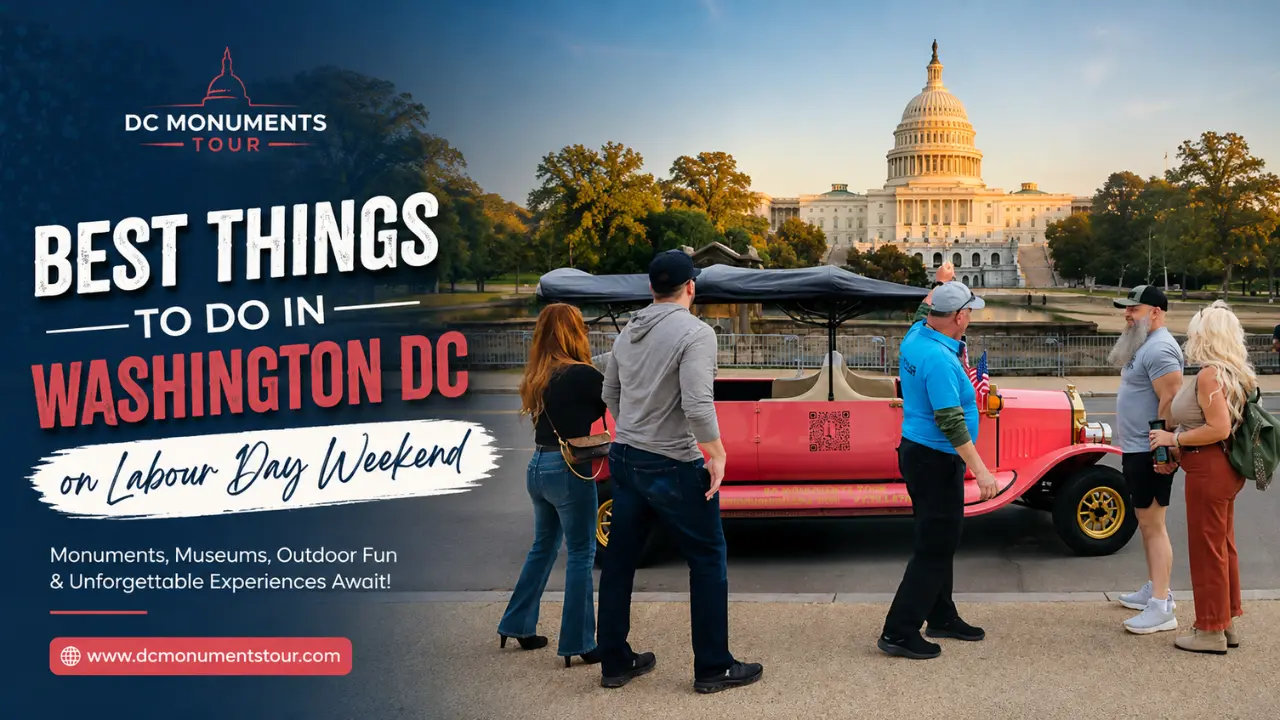
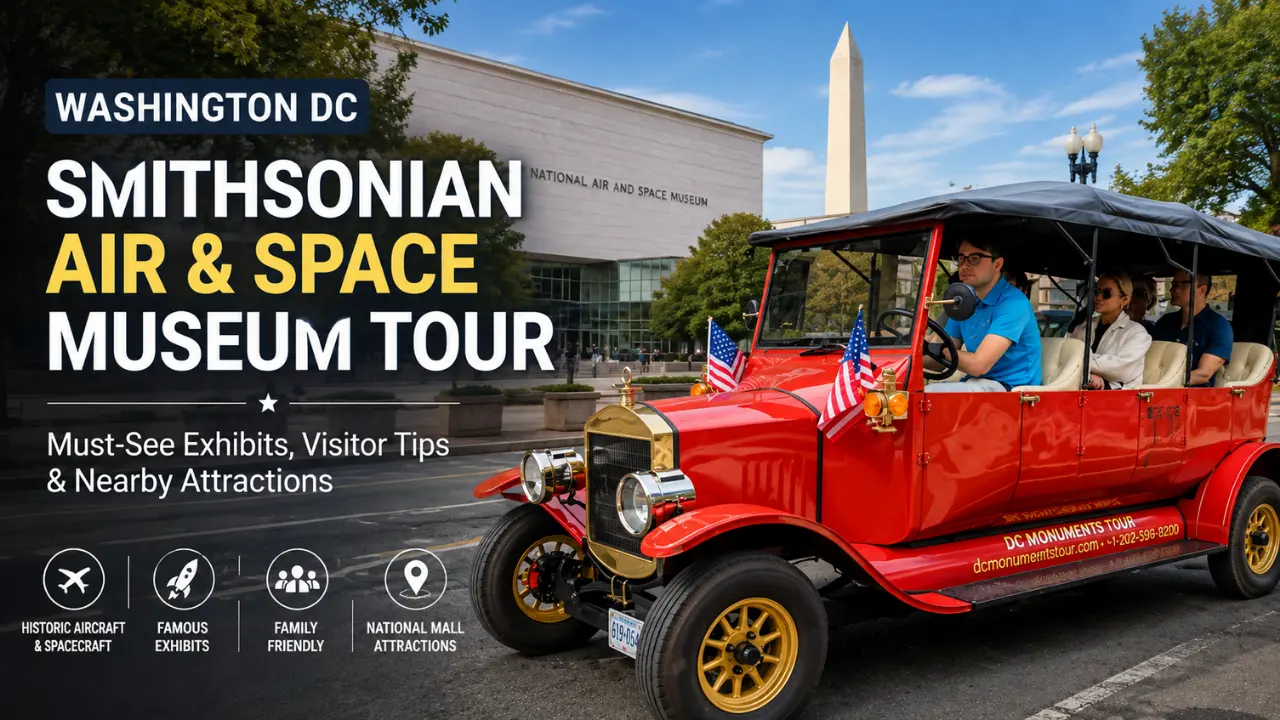
For example, private 7-seater Washington DC tours and other private options from DC Monuments Tour are designed around sightseeing between major Washington landmarks.
Using Washington DC Metro for an Accessible Visit
WMATA states that its entire Metro system, including railcars, platforms, stations, and buses, is accessible. Metro Rail stations provide a step-free path from street level to the train through elevators.
This makes Metro useful for visitors who want to reach the National Mall without driving.
However, station location matters. The National Park Service notes that some Metro stations are at least a mile from the Lincoln Memorial, so visitors should consider the remaining distance from the station to their destination.
Accessible Parking Near the National Mall
Accessible parking is available at various locations throughout National Mall and Memorial Parks.
The NPS currently lists approximately 150 accessible metered public parking spaces near memorials and points of interest, including the Washington Monument, Lincoln Memorial, Jefferson Memorial, FDR Memorial, MLK Memorial, World War II Memorial, Korean War Veterans Memorial, Vietnam Veterans Memorial, and the Tidal Basin.
Parking can still be limited, particularly during busy periods.
If you are driving, check the latest NPS parking information before your visit rather than relying on an older map or blog post.
Accessibility at Smithsonian Museums
The Smithsonian provides extensive accessibility services across its Washington-area museums.
According to the Smithsonian, all of its buildings have at least one accessible entrance, and visitors may use manual or motorized mobility devices.
Smithsonian museums also provide a limited number of free manual wheelchairs on a first-come, first-served basis. These wheelchairs are intended for use within the museum where they are borrowed and cannot be used to travel between Smithsonian locations.
Other Smithsonian Accessibility Services
Depending on the museum and program, visitors can also find:
- Large-print information
- Open captioning
- Audio description
- Assistive listening devices
- Sign-language interpretation by arrangement
- Tactile and verbal description tours
- Aira Access services at Washington-area Smithsonian museums
For services that require advance arrangements, the Smithsonian recommends contacting the individual museum ahead of the visit.
Planning an Accessible Museum Day
If museums are part of your itinerary, avoid planning too many buildings in one day.
The Smithsonian's accessibility map identifies accessible entrances, curb cuts, paved walkways, parking areas, and nearby Metro stations.
A practical plan is to select one or two museums and combine them with nearby outdoor landmarks.
This reduces unnecessary travel between distant buildings and gives you more time inside each museum.
Accessibility for Visitors With Sensory or Communication Needs
Accessibility at the National Mall is not limited to mobility.
The National Park Service offers ASL interpretation by request at no charge and asks visitors to provide advance notice of at least three weeks.
The NPS also provides closed captioning for films at the Lincoln and Thomas Jefferson memorials and the Washington Monument. Large-print material is available at selected sites.
Smithsonian museums offer additional accessibility services, including open captioning, audio description, tactile resources, and assistive listening options.
Restrooms and Rest Stops
Restroom planning is important when spending several hours around the National Mall.
Facilities vary by location, so identify restroom stops before beginning a long route.
For example, the White House Visitor Center has accessible restroom stalls, seating, and a water-bottle filling station.
At the World War I Memorial, the National Park Service identifies accessible restrooms at the nearby White House Visitor Center.
For a comfortable day, plan restroom and rest breaks into your itinerary instead of waiting until someone needs one urgently.
What Is the Best Time for a Comfortable Visit?
The most comfortable time depends on weather, crowds, personal mobility needs, and the attractions you want to visit.
An early start can help you avoid the busiest part of the day, while a slower itinerary can make the experience more manageable.
The National Mall's outdoor sites are generally open 24 hours, although the Washington Monument has separate operating arrangements. NPS rangers are generally on duty at National Mall sites from 9:30 a.m. to 10:00 p.m. daily.
Before visiting, check the official NPS and individual attraction websites for current hours, closures, construction, and special events.
Plan Around Washington DC Weather
Weather can significantly affect comfort when visiting outdoor memorials.
During warm weather, plan breaks, carry water, and avoid creating an itinerary that requires continuous outdoor travel.
During colder or wet conditions, allow additional time between stops and check whether temporary construction or weather conditions affect accessible routes.
A flexible itinerary is particularly useful because outdoor conditions can change during the day.
Can a Private Tour Make the National Mall Easier?
A private tour can reduce the amount of route planning you have to do yourself and allow your group to concentrate on selected landmarks.
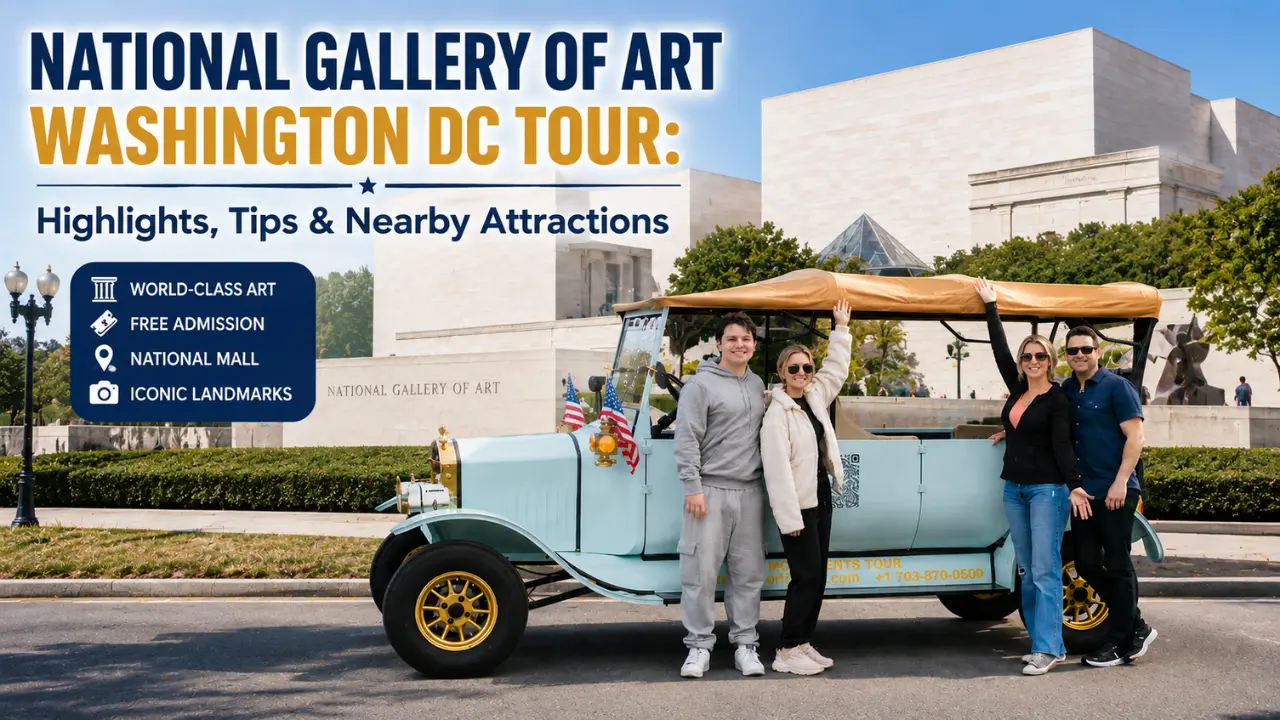
DC Monuments Tour offers private 4-, 5-, 7-, and 10-seater tour options, with itineraries covering major National Mall monuments and memorials.
For example, its private 10-seater tour lists stops including the Washington Monument, Lincoln Memorial, FDR Memorial, MLK Memorial, World War II Memorial, and other major landmarks.
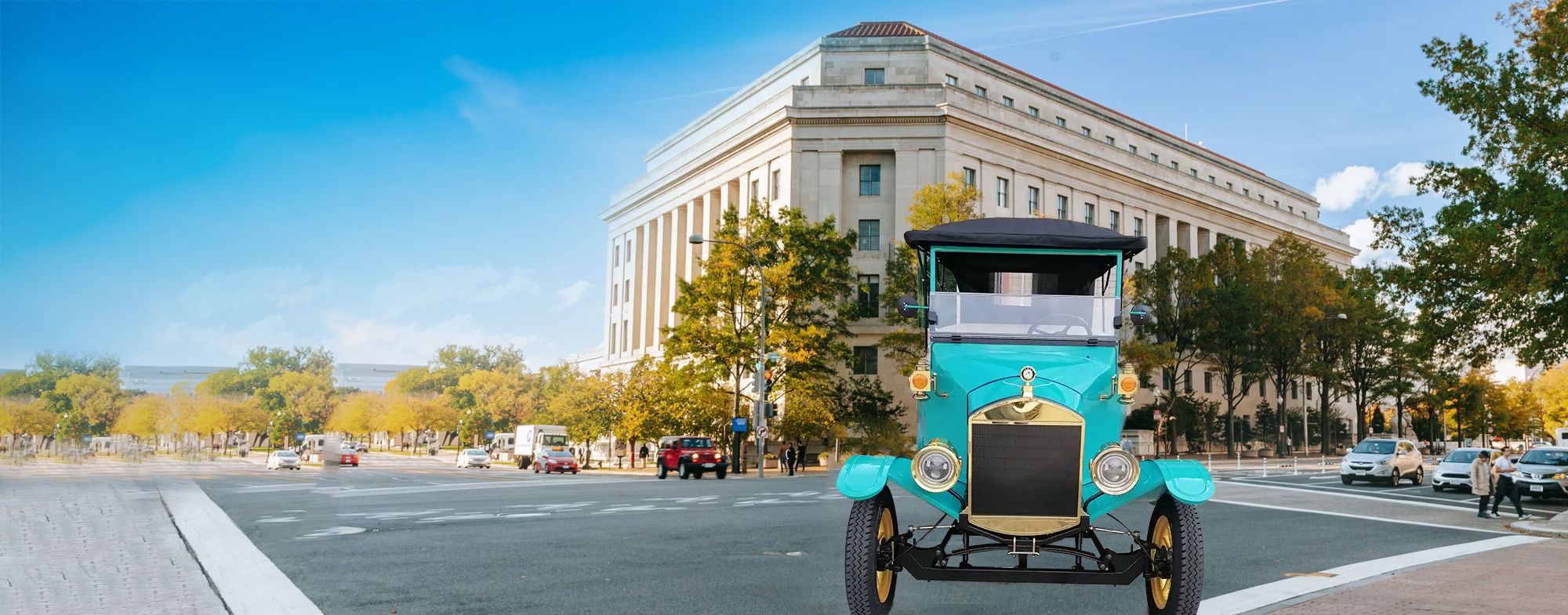
However, the vintage Model-T-style vehicles are not wheelchair accessible. DC Monuments Tour states that, depending on availability, a 7-seat vehicle may accommodate a folding wheelchair. Walking is still required at monument stops.
This distinction is important: a sightseeing vehicle can reduce travel between landmarks, but it should not be presented as wheelchair-accessible transportation unless the operator confirms the specific vehicle and accommodation.
Questions to Ask Before Booking a Sightseeing Tour
If accessibility is important for your group, contact the tour operator before booking and confirm:
- Whether the specific vehicle can accommodate your mobility device
- Whether the mobility device must be folded
- How much walking is required at each stop
- Whether the vehicle can accommodate a caregiver or companion
- Where the vehicle can safely drop off and pick up passengers
- Whether the itinerary can be adjusted around rest breaks
- Whether the vehicle has weight or space limitations
DC Monuments Tour specifically asks guests who may require additional accommodations to contact the company before booking because its classic vehicles have weight limitations.
Sample Comfortable National Mall Itinerary
The following is an example of a slower-paced sightseeing plan. Adjust it according to individual accessibility needs, weather, attraction hours, and current site conditions.
| Time | Activity | Accessibility Approach |
|---|---|---|
| 9:30 AM | Start near the National Mall | Confirm the day's route and restroom locations. |
| 10:00 AM | Washington Monument area | Allow time for photographs and a comfortable break. |
| 11:00 AM | World War II Memorial | Use accessible pathways and avoid rushing between stops. |
| 12:00 PM | Lunch and rest | Take a proper break instead of continuing immediately. |
| 1:30 PM | Lincoln Memorial area | Allow additional time for the memorial and surrounding sites. |
| 2:30 PM | Vietnam and Korean War memorials | Visit selected sites based on energy and mobility needs. |
| 4:00 PM | Optional Smithsonian museum | Choose one nearby museum rather than adding several distant stops. |
10 Tips for a More Comfortable National Mall Visit
- Plan your route before arriving. Avoid crossing the entire Mall repeatedly.
- Check official accessibility information. Conditions and routes can change.
- Bring your own mobility device when possible. NPS and Smithsonian loaners are limited.
- Identify accessible restrooms. Add restroom breaks to the itinerary.
- Use Metro strategically. Confirm the accessible station and the remaining distance to your destination.
- Consider accessible parking. NPS lists accessible parking locations around the Mall.
- Contact museums in advance. Some accessibility services require advance arrangements.
- Allow extra time. A slower itinerary can be easier than trying to see every landmark.
- Ask tour operators specific questions. Do not assume that a sightseeing vehicle is wheelchair accessible.
- Keep your itinerary flexible. Weather, crowds, construction, and individual energy levels can affect the day.
Private DC Tour Options for Different Group Sizes
If your main goal is to reduce travel between National Mall landmarks, DC Monuments Tour currently lists several private vehicle options:
- Private 4-seater Washington DC tour
- Private 5-seater Washington DC tour
- Private 7-seater Washington DC tour
- Private 10-seater Washington DC tour
The company's tour pages state that private itineraries can be customized and that the vehicles cover major National Mall attractions.
For visitors with specific accessibility requirements, confirm the exact vehicle and accommodation before booking.
Who Can Benefit From Accessibility Planning?
Accessibility planning can be useful for more than wheelchair users.
It can help:
- Visitors using wheelchairs or mobility scooters
- Senior travelers who need frequent rest breaks
- Families traveling with young children
- Visitors who cannot comfortably walk long distances
- Travelers with temporary mobility limitations
- Visitors who need accessible transportation connections
- Travelers who benefit from captioning, ASL, large print, or audio services
The goal is not to see every monument as quickly as possible. A well-planned itinerary should give you enough time to enjoy the places you actually want to experience.
Key Takeaways
- The National Park Service confirms that major National Mall monuments and memorials are wheelchair accessible.
- Some historic facilities may still have accessibility limitations.
- Limited wheelchair loans are available at selected memorials.
- Smithsonian museums provide accessible entrances and several accessibility services.
- WMATA states that its Metro system provides accessible rail and bus services.
- Accessible parking is available at multiple National Mall locations.
- Private sightseeing vehicles can reduce travel between landmarks, but vehicle accessibility must be confirmed in advance.
- A shorter, flexible itinerary can make a National Mall visit more comfortable.
Conclusion: Explore Washington DC at Your Own Pace
The National Mall offers many accessible attractions, but a comfortable visit depends on more than simply finding a wheelchair-accessible entrance.
Route planning, transportation, rest breaks, accessible parking, museum services, weather, and individual mobility needs all matter.
For visitors who want to reduce travel between landmarks, a private sightseeing tour can be one option to consider. Just confirm the vehicle's accessibility and the amount of walking required before booking.
With the right planning, you can spend less time worrying about logistics and more time experiencing Washington DC's monuments, memorials, museums, and history.